All-Optical Network and Structured Cabling
A high-bandwidth wired backbone — the "nervous system" of campuses and buildings.
All-optical networks and structured cabling form the information transmission backbone of campuses and buildings. With over 10 years of experience in weak-current and network engineering, Sichuan DCH Technology (DCH) integrates solutions such as Passive Optical LAN (POL/FTTD), Cat 6/Cat 6A copper cabling, ODN optical distribution networks and electronic patch panels, providing full-lifecycle services from network planning, construction and installation to testing and acceptance, so that voice, data, video and IoT services enjoy "sufficient bandwidth, stable links and easy management."
1. Background and Value
Smart campuses, offices, hospitals and schools place ever-higher demands on bandwidth and reliability. Traditional copper cabling struggles with long-distance, high-bandwidth scenarios, while unplanned cabling leads to messy links, difficult troubleshooting and cumbersome expansion.
For project owners and network managers, all-optical networks and structured cabling deliver the following value:
- High bandwidth: The large capacity of a single optical fiber supports HD services, IoT and future evolution;
- Strong reliability: Passive components need no power and fail rarely, keeping links stable;
- Easy management: Electronic patch panels and link registers make troubleshooting and changes clear at a glance;
- Lower cost: POL requires fewer cables and passive nodes, offering better total cost of ownership.
2. Overall Architecture: A Three-Layer Access–Patching–Backhaul Network System
DCH breaks the system into an "access–patching–backhaul" three-layer architecture that ensures link reliability and emphasizes closed-loop management:
| Layer | Components | Key Capabilities |
|---|---|---|
| Access layer | Fiber-to-the-desk (POL/FTTD), Cat 6/Cat 6A copper | High-bandwidth access, service tiering, flexible terminal access |
| Patching layer | ODN optical distribution network, electronic patch panels, telecom rooms | Splitting/splicing/patching, link tracing, environment assurance |
| Backhaul layer | Wi-Fi 6/7 backhaul, core switch uplinks | Wireless backhaul, core aggregation, redundant links |
From access to patching to backhaul, the full link is delivered with integrated planning, testing and labeling. Managers can follow the link register to "find it on the map," turning scattered "cables" into a clear "network backbone."
3. Core Solutions and Key Points
3.1 Passive Optical LAN (POL / Fiber-to-the-Desk)
For offices, hotels and hospitals, the Passive Optical LAN (POL) architecture brings fiber directly to the desk or room, with passive splitting in between — no power, fewer faults. Large single-fiber bandwidth carries data, voice, video and IoT services, meeting 10G/25G evolution needs.
3.2 Cat 6/Cat 6A Copper Cabling
Cat 6/Cat 6A copper cabling is used for short-distance, high-density desktop access, with standardized construction ensuring link performance. Copper and fiber are selected by service tier: optical for backbones and high bandwidth, copper for desktops and terminals, balancing performance and cost.
3.3 ODN Optical Distribution Network
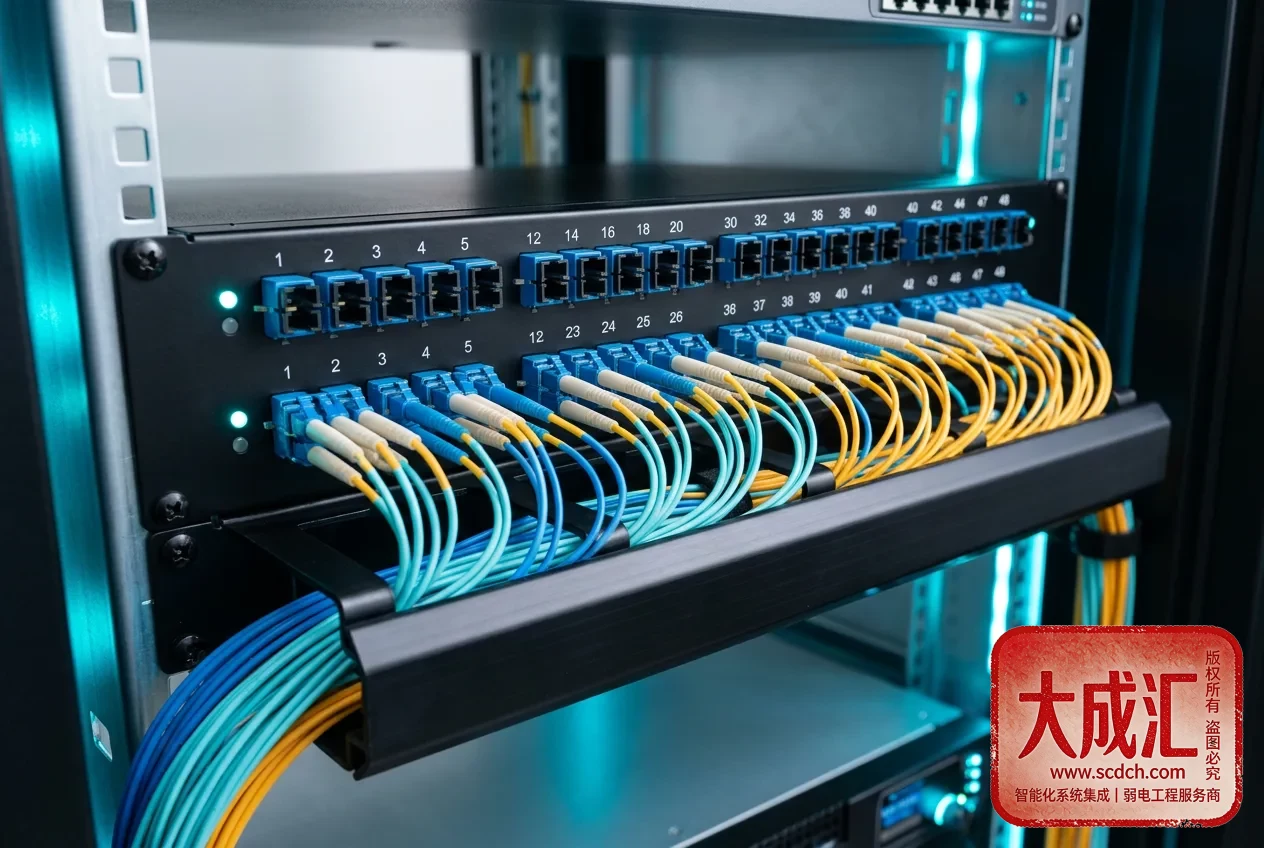
An ODN optical distribution network is planned per users and floors, using splitters, optical distribution frames and splice trays for rational light-path distribution. Patching, splicing and labeling are managed in a standardized way with a clear light-path register; expansion is completed simply by patching.
3.4 Electronic Patch Panels
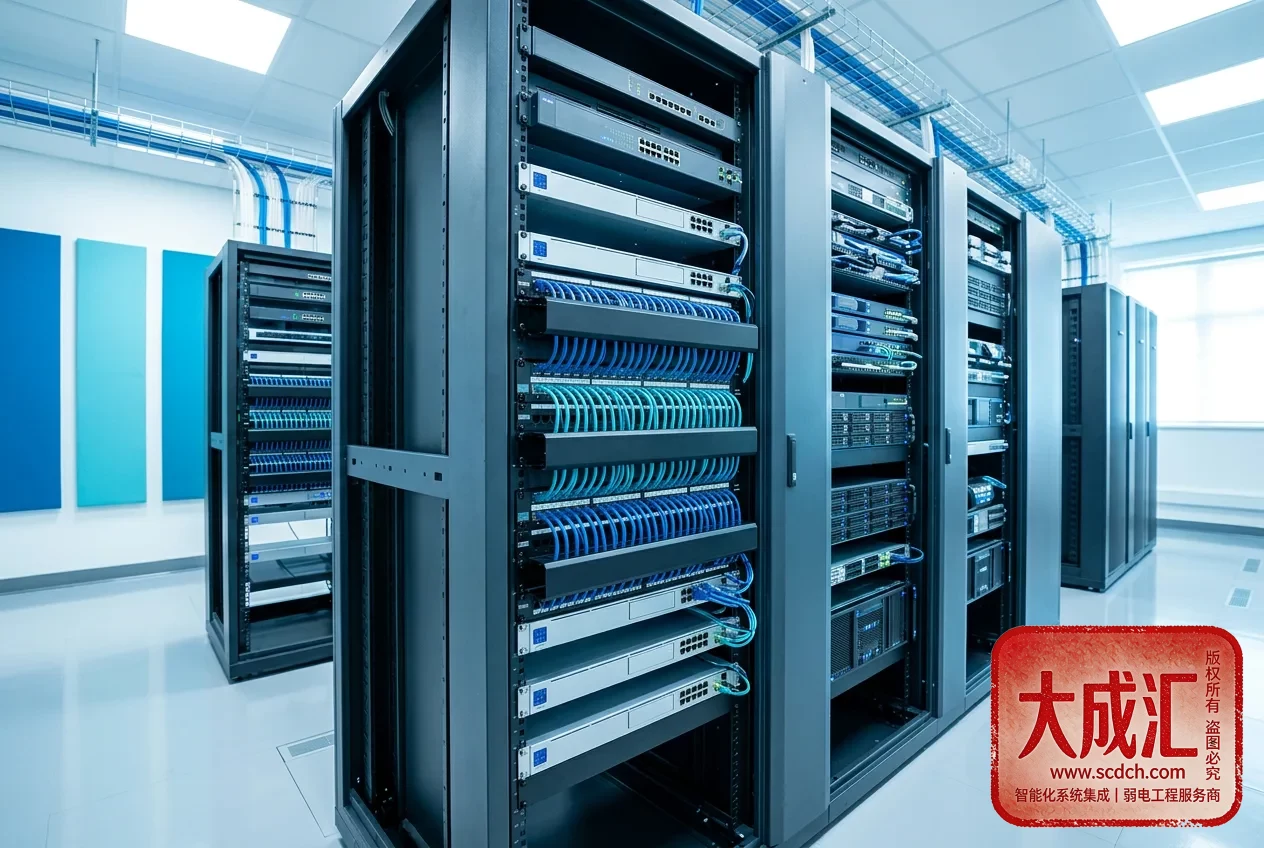
Electronic patch panels are deployed in telecom rooms for port-level link tracing and real-time monitoring. Patching changes are recorded automatically, eliminating the embarrassment of "cannot find the cable after hours" and greatly improving troubleshooting and O&M efficiency.
3.5 Wi-Fi Backhaul and Telecom Room Environment
The uplink backhaul of wireless APs is included in unified planning, with optical/copper links selected by capacity. Temperature, humidity, grounding and power in telecom rooms are planned in advance to keep active equipment running stably.
4. Typical Application Scenarios
- Smart campuses: The all-optical backbone carries office, security, IoT and wireless backhaul;
- Office buildings: Fiber-to-the-desk plus Cat 6 copper dual-mode for high-bandwidth office and conference needs;
- Hospitals: All-optical networks carry high-traffic HIS, PACS and other systems reliably;
- Schools: Unified cabling for teaching, offices and dormitories supports multi-service convergence.
5. Compliance and Standards
All-optical network and structured cabling construction must align with national and industry standards; DCH implements them from design through acceptance:
- GB 50311 Code for Engineering Design of Generic Cabling System;
- GB 50312 Code for Engineering Acceptance of Generic Cabling System;
- ISO/IEC 11801 series international standards for generic cabling;
- Technical specifications and test requirements for Passive Optical LAN (POL).
6. Why Choose DCH
As a local service provider with over 10 years of expertise in intelligent system integration, DCH delivers differentiated capabilities in all-optical network and cabling projects:
- Full-stack integration: Optical-copper hybrid planning, patching management and wireless backhaul are designed from one source, avoiding multi-vendor disputes;
- Full-lifecycle service: From network planning, construction and installation to testing, acceptance and register handover;
- Compliance assurance: Familiar with cabling codes and link test standards; acceptance passes on the first attempt;
- Local response: Rapid on-site support across Sichuan and Southwest China for troubleshooting and expansion;
- Proven cases: Serving many campus, office and government/enterprise projects with reusable delivery experience.
Together we achieve greatness and pool excellence. Guided by the philosophy of "innovation, integrity, professionalism and collaboration," DCH builds every link into a campus "nervous system" with sufficient bandwidth, stable links and easy management.
7. Construction Essentials and Common Considerations
- Optical-copper tiering: Select optical/copper by service and distance; optical for backbones, copper for desktops;
- Link testing: Test every link before handover and issue reports to ensure performance;
- Labeling and register: Unified numbering of light paths and ports with a synchronized link register;
- Telecom room environment: Plan temperature, humidity, grounding and power in advance to prevent active-equipment failures;
- Expansion headroom: Reserve ODN split ratios and tray capacity for smooth expansion;
- Wireless backhaul: Size AP uplinks by bandwidth to avoid backhaul bottlenecks degrading the wireless experience.
8. FAQ
Q1: How to choose between POL and traditional structured cabling?
Long-distance, high-bandwidth, terminal-dense scenarios suit POL (fewer cables, more passive nodes, no power); short desktop distances can keep copper. DCH plans a hybrid "optical-copper" solution by service and cost.
Q2: Why use electronic patch panels?
They provide port-level link tracing with automatic recording of patching changes, greatly improving troubleshooting and O&M efficiency — ideal for large campuses with complex, frequently changing links.
Q3: How is link quality ensured?
Every link is tested before handover (fiber loss, copper channel parameters) with test reports, combined with standardized construction and labeling, ensuring performance meets standards and is traceable.
Q4: What if bandwidth runs out later?
All-optical networks offer large single-fiber bandwidth and easy upgrades; with reserved ODN split ratios and tray capacity, expansion only requires replacing head-end cards or adjusting patches for smooth evolution.
For network planning or detailed cabling design tailored to a specific campus or building, please contact the DCH intelligent system integration team for free preliminary consulting and network solutions.