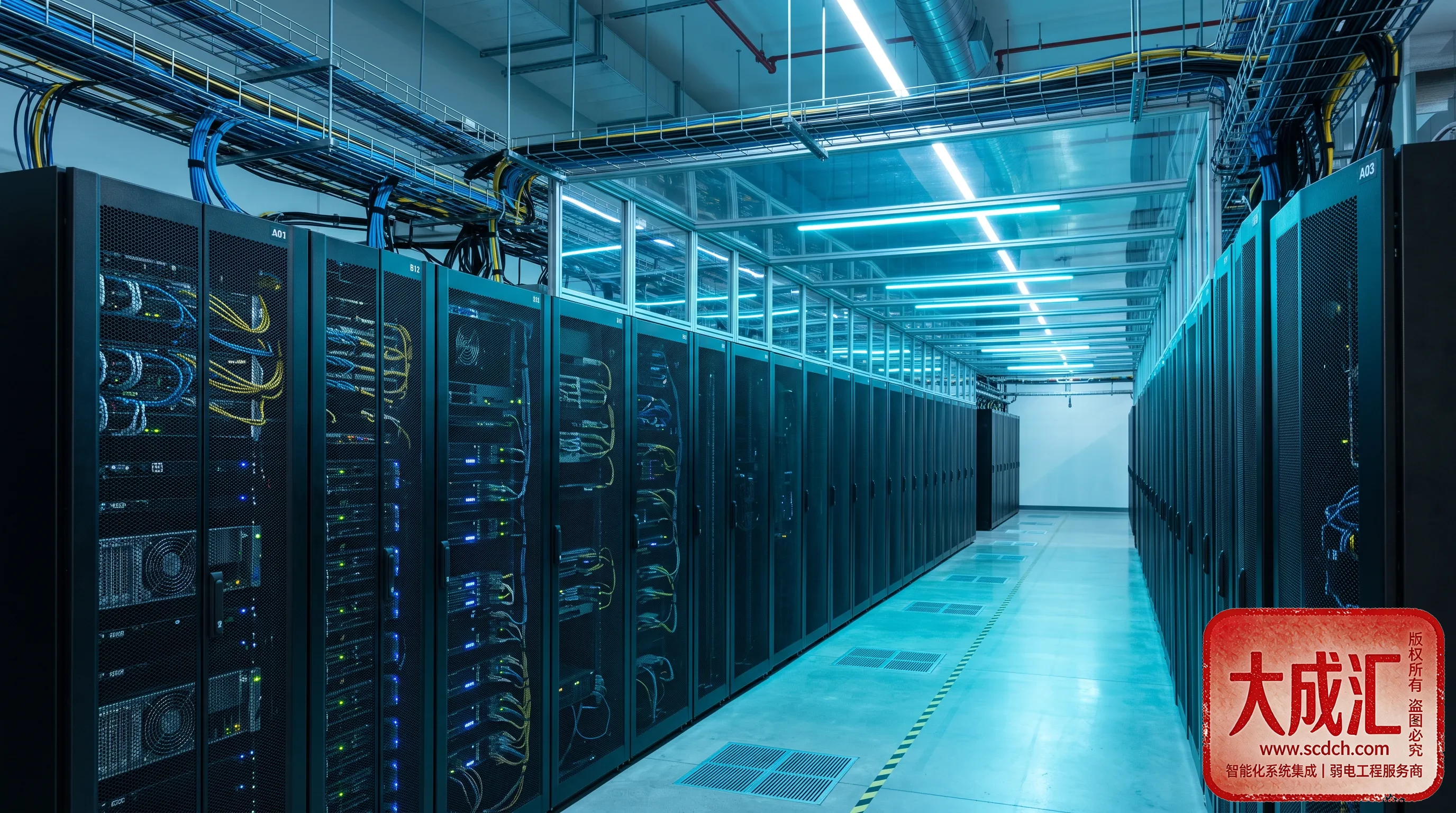
Data Center and Server Room Engineering
Integrated power, cooling and monitoring — ensuring high IT availability and efficiency.
Data center and server room engineering is the "heart" that carries an enterprise's IT systems. With over 10 years of experience in weak-current and electromechanical engineering, Sichuan DCH Technology (DCH) integrates capabilities such as high-reliability power distribution, precision air conditioning with cold aisles, environment monitoring and a DCIM management platform, providing full-lifecycle services from room planning, equipment installation and commissioning to O&M handover, so the server room "powers steadily, cools precisely, monitors fully and operates efficiently."
1. Background and Value
As enterprises digitalize deeply, room availability and efficiency directly affect business continuity. Power interruption, overheating crashes and missing monitoring are the three major risks of room operation; energy consumption and PUE directly affect operating costs.
For project owners and IT O&M teams, server room engineering delivers the following value:
- High availability: Dual mains power plus redundant UPS keeps power links reliable;
- Stable cooling: Precision air conditioning and cold-aisle layout eliminate local hotspots;
- Full monitoring: Environment monitoring plus DCIM closes the alert loop to people;
- Energy savings: Hot/cold aisles and efficiency management lower PUE and electricity bills.
2. Overall Architecture: A Three-Layer Power–Cooling–Monitoring Room System
DCH breaks server room engineering into a "power–cooling–monitoring" three-layer architecture, with efficiency management throughout:
| Layer | Components | Key Capabilities |
|---|---|---|
| Power layer | Dual mains, UPS, distribution cabinets, generator interface | Uninterrupted power, link redundancy, load balancing |
| Cooling layer | Precision air conditioners, cold/hot aisles, fresh air and humidification | Precise temperature/humidity, local heat prevention, energy-saving operation |
| Monitoring layer | Environment monitoring (temperature/humidity, access, video), DCIM platform | Real-time monitoring, anomaly alerts, closed-loop work orders |
From power to cooling to monitoring, the room is designed, built and delivered as an integrated whole. O&M teams view the entire room on one screen via the DCIM platform, turning scattered "equipment" into a coordinated "high-availability server room."
3. Core Systems and Key Points
3.1 High-Reliability Power Distribution and UPS
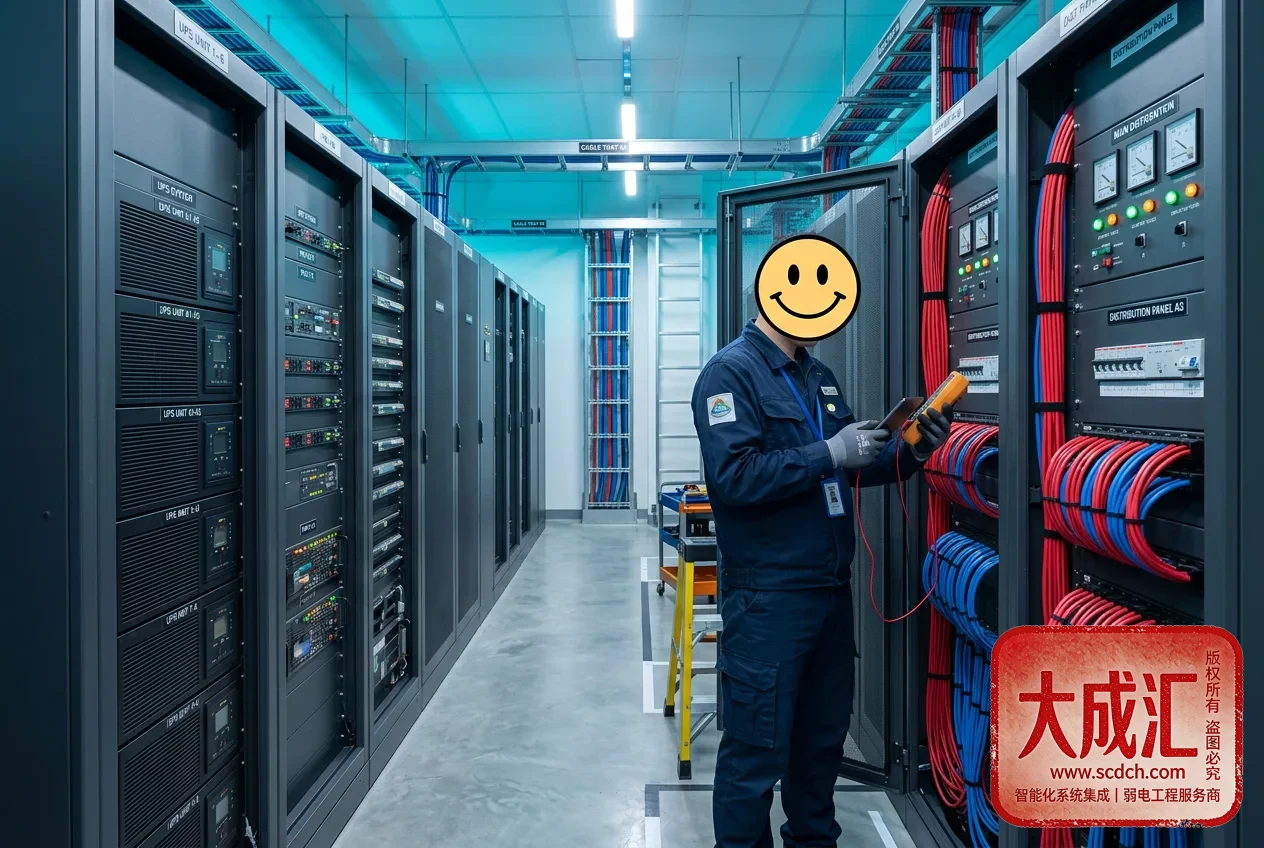
The room adopts a dual-mains plus redundant UPS architecture, with important equipment on dual power inputs; distribution cabinets, battery banks and generator interfaces ensure seamless switchover during outages and continuous IT power supply.
3.2 Precision Air Conditioning and Cold/Hot Aisles
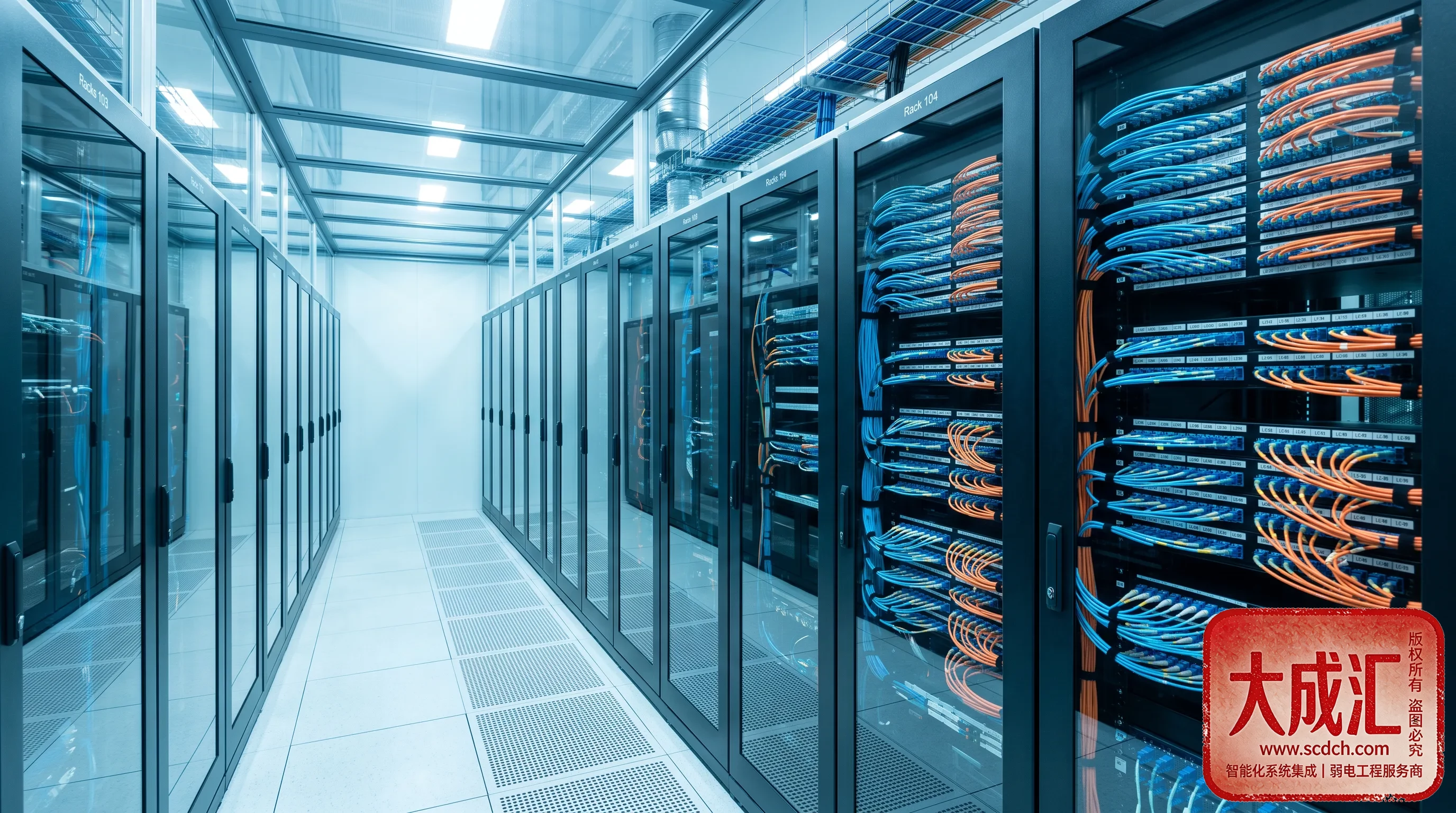
Precision air conditioners are sized to the room heat load, with sealed cold-aisle/hot-aisle layouts for precise temperature and humidity control and hotspot prevention. Cooling solutions balance redundancy and efficiency to provide stable heat dissipation for high-density racks.
3.3 Environment Monitoring (Dynamic Environment Monitoring)
The environment monitoring system tracks temperature, humidity, water leakage, smoke, access control and video in real time, alerting immediately and pushing to duty staff — "the room status is fully in hand."
3.4 DCIM Management Platform
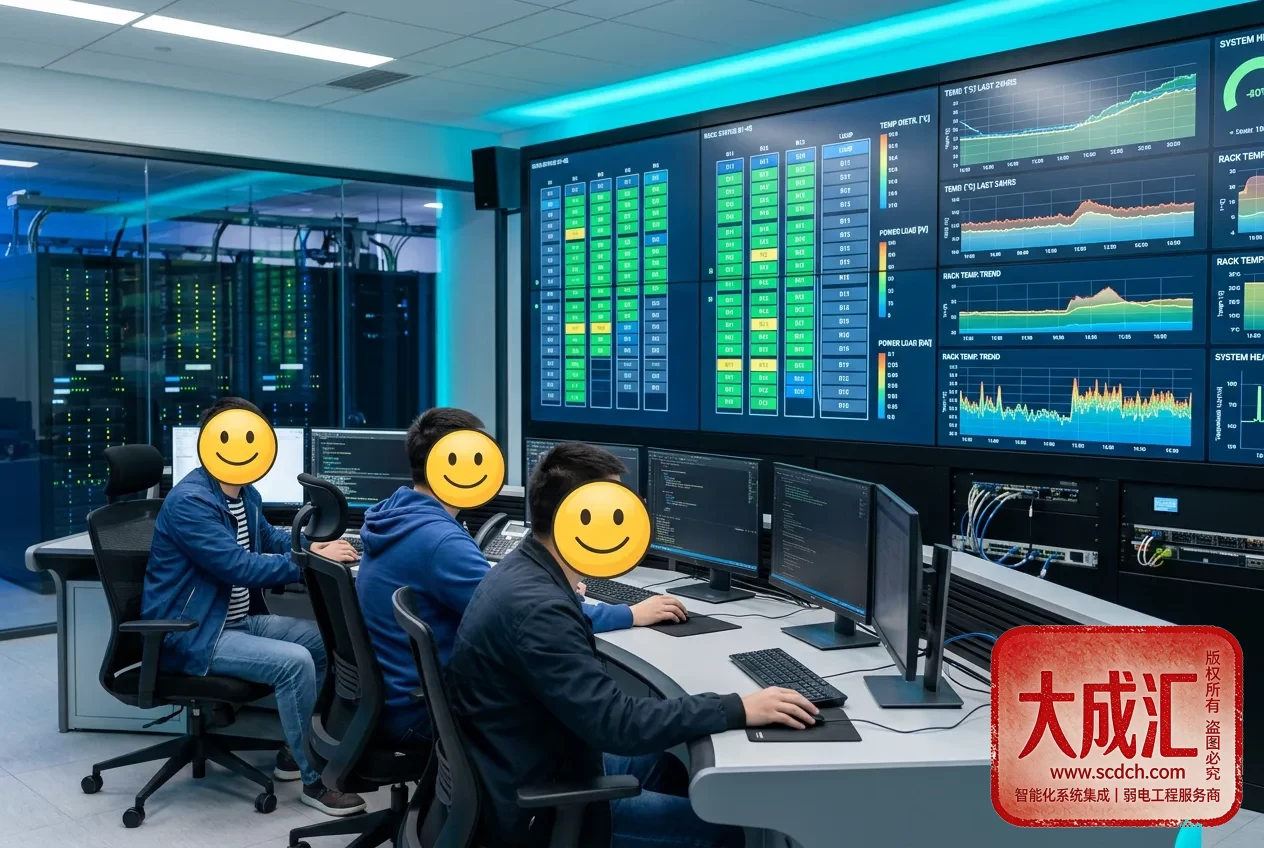
A DCIM (Data Center Infrastructure Management) platform centrally manages power, cooling, space and capacity, providing energy analysis, capacity planning and closed-loop alert work orders for refined room operations.
3.5 Modular Server Rooms
For small/medium rooms and edge nodes, modular server room solutions pre-integrate power, cooling and monitoring for rapid on-site deployment and on-demand expansion, shortening construction cycles and reducing initial investment.
4. Typical Application Scenarios
- Enterprise rooms: Integrated power, cooling and monitoring for small/medium self-built rooms;
- Edge nodes: Rapid modular room deployment for edge computing nodes;
- Disaster recovery centers: Off-site backup rooms for critical business continuity;
- Cloud edges: Construction and retrofit of cloud vendors' edge node rooms.
5. Compliance and Standards
Data center and server room engineering must align with national standards and industry specifications; DCH implements them from design through acceptance:
- GB 50174 Code for Design of Data Centers;
- GB 50462 Code for Construction and Acceptance of Data Center Infrastructure;
- TIA-942 data center infrastructure tiering standard;
- Requirements for room power distribution, fire protection and classified protection (MLPS).
6. Why Choose DCH
As a local service provider with over 10 years of expertise in intelligent system integration, DCH delivers differentiated capabilities in server room projects:
- Full-stack integration: Power, cooling, monitoring and weak-current systems are designed from one source, avoiding multi-vendor disputes;
- Full-lifecycle service: From room planning, equipment installation and commissioning to O&M handover;
- Compliance assurance: Familiar with room design, construction and acceptance codes; acceptance passes on the first attempt;
- Local response: Rapid on-site support across Sichuan and Southwest China with dependable fault emergency response;
- Proven cases: Serving many enterprises, government/enterprise clients and data center projects with reusable delivery experience.
Together we achieve greatness and pool excellence. Guided by the philosophy of "innovation, integrity, professionalism and collaboration," DCH builds every room into a high-availability "heart" with stable power, precise cooling, full monitoring and optimal efficiency.
7. Construction Essentials and Common Considerations
- Power redundancy: Dual mains plus redundant UPS with dual power inputs for important equipment;
- Cooling layout: Sealed cold/hot aisles with air conditioners precisely sized to heat load;
- PUE management: Efficiency targets throughout design and operation, with cold/hot aisles and variable-frequency energy saving;
- Environment closed loop: Alerts, dispatch, response and review are fully documented;
- Capacity planning: Match rack power density with cooling and power capacity, reserving expansion;
- Fire linkage: Gas fire suppression linked with monitoring protects equipment and people.
8. FAQ
Q1: Must a server room have dual mains power?
Important rooms should use dual mains plus redundant UPS for seamless outage switchover; small rooms can configure single mains plus UPS plus generator interface per business tier, balancing cost and reliability.
Q2: What does PUE mean?
PUE = total room energy ÷ IT equipment energy. The closer to 1, the more efficient. Cold/hot aisles, variable-frequency air conditioners and efficiency management effectively lower PUE.
Q3: What scenarios suit modular server rooms?
Small/medium rooms, edge nodes and rapid-deployment business scenarios suit modular rooms — pre-integrated, fast to deploy and expandable on demand, lowering initial investment and construction cycles.
Q4: How deep does environment monitoring alerting go?
All dimensions — temperature, humidity, water leakage, smoke, access and video — are monitored, with immediate alerts closed to people, ensuring "every alarm gets a response."
For room planning or detailed design tailored to a specific business scale, please contact the DCH intelligent system integration team for free preliminary consulting and server room solutions.