Smart Ward Call System
One-touch call at the bedside — faster nursing response.
A smart ward call system is a ward communication system built around bedside calls, linked with nurse stations and corridor screens. With over 10 years of experience in healthcare intelligent integration, Sichuan DCH Technology (DCH) integrates capabilities such as IP network call terminals, nurse station consoles and corridor screens, positioning and nursing linkage, and mobile nursing PDAs, with interfaces to HIS systems, delivering full-lifecycle services from solution design and equipment installation to platform handover, so nursing response is "a second faster, a bit more precise and a touch warmer."
1. Background and Value
Inpatients have diverse needs, and traditional call systems suffer from response dependent on human watch, unclear status, and unrecorded handling. Nurses are overloaded, and call response efficiency directly affects patient satisfaction and nursing quality.
For hospitals and nursing managers, the smart ward call system delivers the following value:
- Faster response: One-touch bedside calls display instantly at the nurse station with corridor screen reminders;
- Transparent status: Calls, handling and completion are visible throughout; nursing status is traceable;
- Efficient linkage: Positioning and nursing linkage dispatch the nearest nurse, reducing round trips;
- Data traces: Call and handling records are retained for nursing quality analysis.
2. Overall Architecture: A Three-Layer Call–Linkage–Platform Nursing System
DCH breaks the smart ward call system into a "call–linkage–platform" three-layer architecture that ensures call reachability and emphasizes nursing coordination:
| Layer | Components | Key Capabilities |
|---|---|---|
| Call layer | Bedside IP call terminals, bathroom emergency calls, corridor screens | One-touch calls, emergency calls, voice intercom, status display |
| Linkage layer | Nurse station consoles, mobile nursing PDAs, positioning linkage | Call tiering, nearest-person dispatch, two-way intercom, response traces |
| Platform layer | Call management platform, HIS interface, statistics | Unified management, data exchange, nursing quality analysis |
From bedside to nurse station to platform, the system is planned and delivered as an integrated whole. Nurses receive and handle orders via PDAs; nursing managers track response efficiency via the platform, turning scattered "calls" into a coordinated "nursing closed loop."
3. Core Systems and Key Points
3.1 Bedside IP Call Terminals
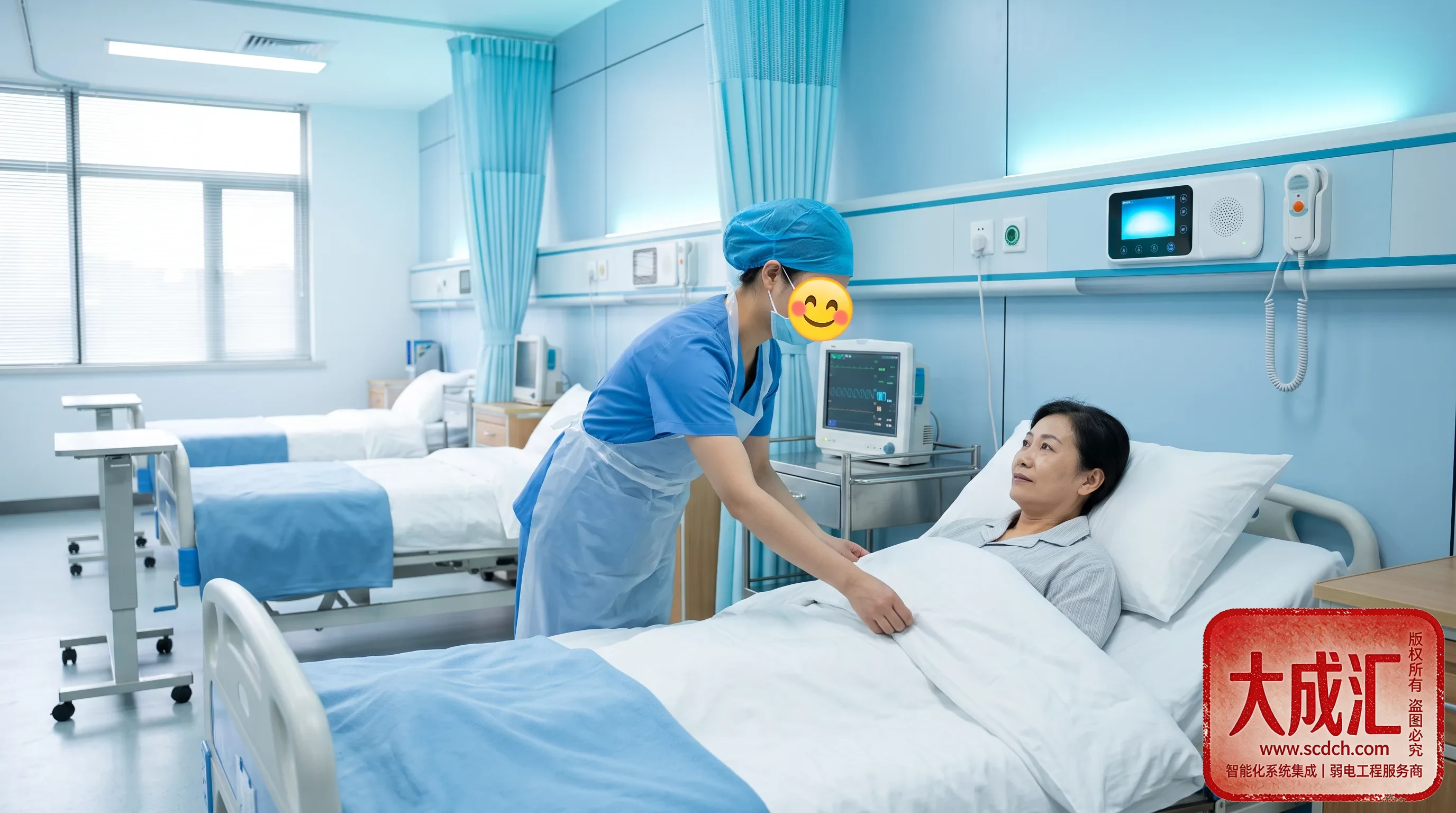
IP network call terminals are deployed at each bedside, supporting one-touch calls, bathroom emergency calls and two-way intercom. Terminals can be extended with infusion alarms and bedside nursing information for diverse clinical needs.
3.2 Nurse Station Consoles and Corridor Screens
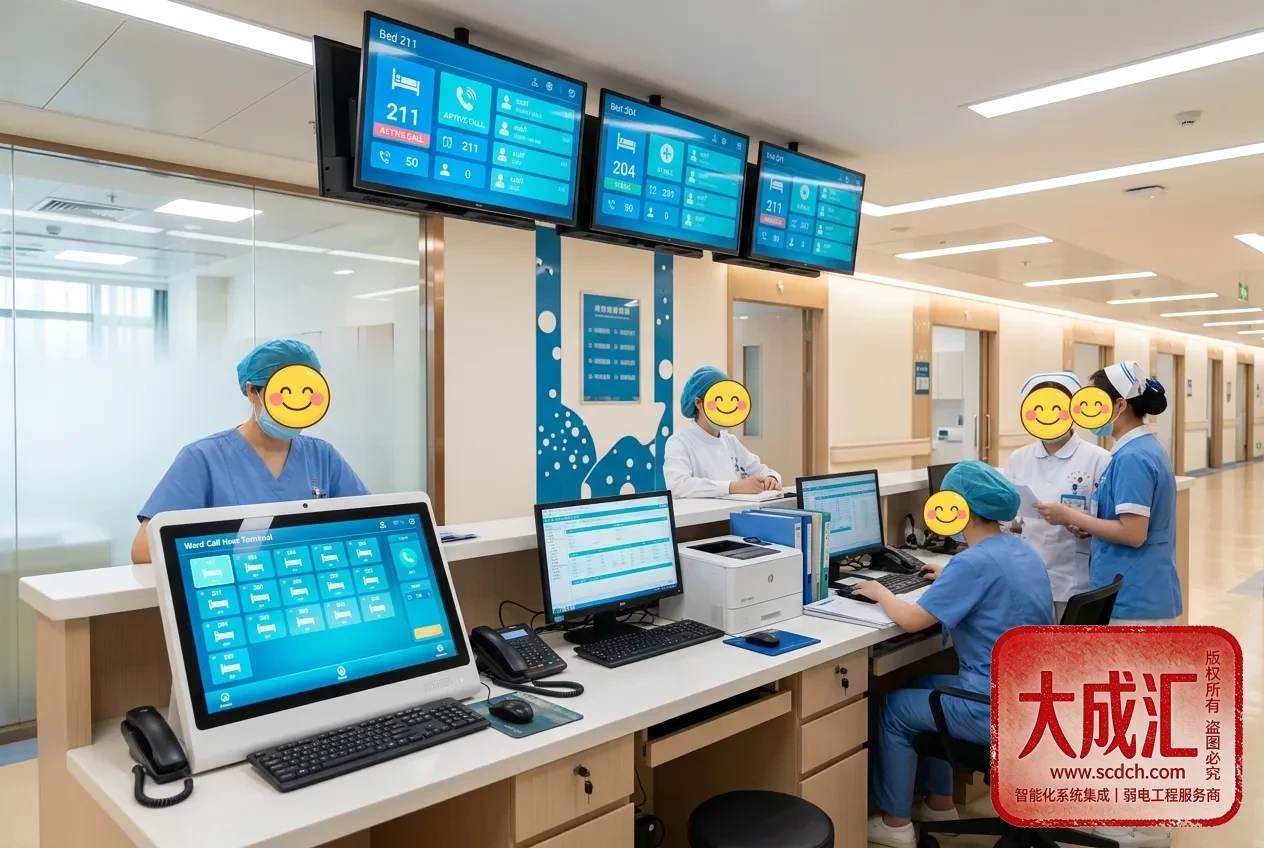
The nurse station deploys consoles for unified call reception, dispatch and intercom, while corridor screens display calling beds and priority in real time. Sound plus light double reminders ensure nurses respond immediately.
3.3 Positioning and Nursing Linkage
Through positioning and nursing linkage, a call automatically associates with the responsible nurse and nearby staff; PDAs receive dispatch orders with navigation, reducing response time. Timeout calls automatically escalate reminders to prevent missed calls.
3.4 Mobile Nursing PDAs and HIS Interface
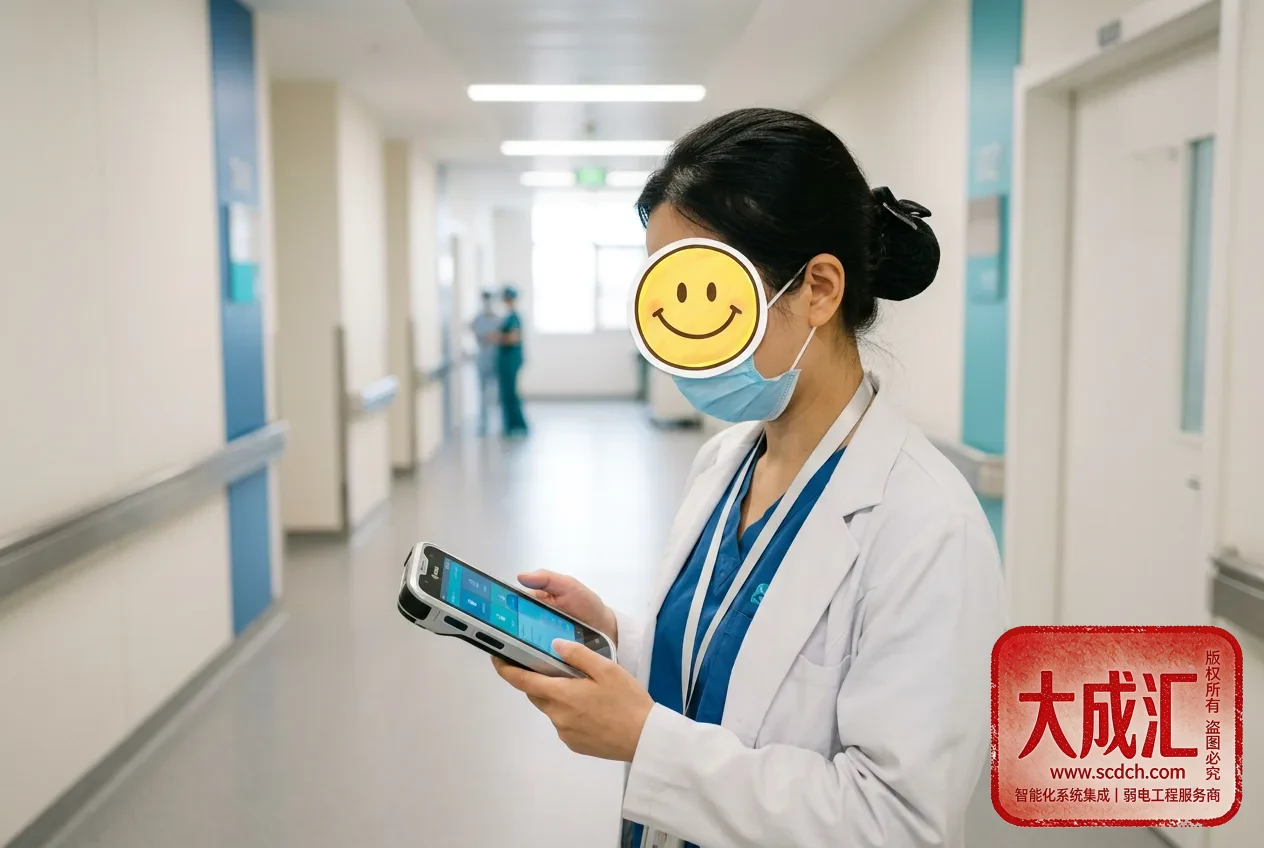
Nurses use mobile nursing PDAs to receive orders, handle and record; data is automatically returned to the platform and integrated with HIS for interoperation of nursing records, order execution and patient information, reducing duplicate entry.
4. Typical Application Scenarios
- Inpatient wards: Bedside calls plus nurse station linkage and corridor reminders improve response efficiency;
- Elderly care apartments: Emergency calls plus positioning linkage protect senior safety;
- Rehabilitation centers: Call and nursing records combined to support rehabilitation process management.
5. Compliance and Standards
Smart ward call system construction must align with healthcare industry standards; DCH implements them from design through acceptance:
- Relevant design codes for hospital intelligent construction;
- GB 50348 Technical Code for Engineering of Security and Protection System (zonal linkage requirements);
- Requirements for electrical and equipment safety in medical premises;
- Compliance for patient personal information and medical data security.
6. Why Choose DCH
As a local service provider with over 10 years of expertise in intelligent system integration, DCH delivers differentiated capabilities in healthcare intelligent projects:
- Full-stack integration: Calls, intercom, positioning and HIS interfaces are designed from one source, avoiding multi-vendor disputes;
- Full-lifecycle service: From solution design, equipment installation and commissioning to O&M support;
- Healthcare compliance: Familiar with medical electrical safety and data compliance requirements;
- Local response: Rapid on-site support across Sichuan and Southwest China;
- Proven cases: Serving many hospitals, elderly-care and rehabilitation institutions with reusable delivery experience.
Together we achieve greatness and pool excellence. Guided by the philosophy of "innovation, integrity, professionalism and collaboration," DCH turns every call into a nursing closed loop that responds faster, handles more precisely and records more completely.
7. Construction Essentials and Common Considerations
- Call tiering: Tier calls by urgency with emergency calls prioritized;
- Linkage dispatch: Link with positioning and PDAs for nearest-person response and fewer round trips;
- Timeout escalation: Automatic escalation reminders for timed-out calls prevent missed calls;
- Power reliability: Reliable power for ward terminals and consoles so calls never fail during outages;
- HIS interface: Data interoperation with HIS for integrated nursing records;
- Trace analysis: Call and handling records retained to support nursing quality improvement.
8. FAQ
Q1: How is the bathroom emergency call ensured?
The bedside terminal supports a bathroom emergency call button; pull-cord or button triggers immediate reminders at the nurse station and corridor screen with emergency level distinction.
Q2: What if a call times out with no one handling it?
The system automatically escalates by timeout, alerting the head nurse or duty staff to prevent missed calls.
Q3: Can it interface with the hospital HIS?
Yes. The call platform interfaces with HIS through standard interfaces, interworking patient information, nursing records and order execution data.
Q4: Can renovated wards be equipped?
Yes. Retrofit solutions for existing wards are supported, implemented ward by ward while balancing construction schedules and normal clinical operations.
For detailed ward call solution design tailored to a specific ward, please contact the DCH intelligent system integration team for free preliminary consulting and solution design.