Urban Flood Control and Drainage Monitoring
Real-time rainfall and waterlogging monitoring keeps the city from "seeing the sea."
Urban flood control and drainage monitoring is a real-time monitoring system for urban waterlogging defense, covering rainfall, river water levels, waterlogging points and pump station conditions. With over 10 years of experience in intelligent system integration and PLC control, Sichuan DCH Technology (DCH) integrates capabilities such as tipping-bucket/optical rain gauges, electronic water gauges and radar level meters, AI video recognition of waterlogging points, and remote transmission of pump station conditions, delivering full-lifecycle projects from point deployment and equipment installation to platform operation. It provides scientific dispatch evidence for urban flood control and drainage, so that every rainstorm can be "seen, measured and drained."
1. Background and Value
Frequent extreme rainstorms make urban waterlogging a prominent issue affecting safe city operations. Underpass tunnels and low-lying roads "flood whenever it rains," and the passive model of late warnings and manpower-based response urgently needs to change.
For urban flood control and drainage management departments, the value of this monitoring system includes:
- Early warning: Real-time rainfall and water level monitoring with advance assessment of waterlogging risks;
- Precise dispatch: Remote pump station condition linkage for precisely deployed drainage forces;
- Loss reduction: Automatic alerts at underpass tunnels and low-lying points guide people to safety;
- Review: Full data trails of rainfall–waterlogging–drainage support post-event review and improvement.
2. Overall Architecture: A Three-Layer Sensing–Linkage–Platform Drainage Monitoring System
DCH breaks urban flood control and drainage monitoring into a "sensing–linkage–platform" three-layer architecture emphasizing integrated "monitoring–assessment–response":
| Layer | Components | Key Capabilities |
|---|---|---|
| Sensing layer | Tipping-bucket/optical rain gauges, electronic water gauges, radar level meters, AI waterlogging video | Real-time collection of rainfall, water level, waterlogging and images |
| Linkage layer | Remote pump opening/condition transmission, gate linkage, audio-visual warnings | Automatic pump start/stop, water level linkage dispatch, on-site warnings |
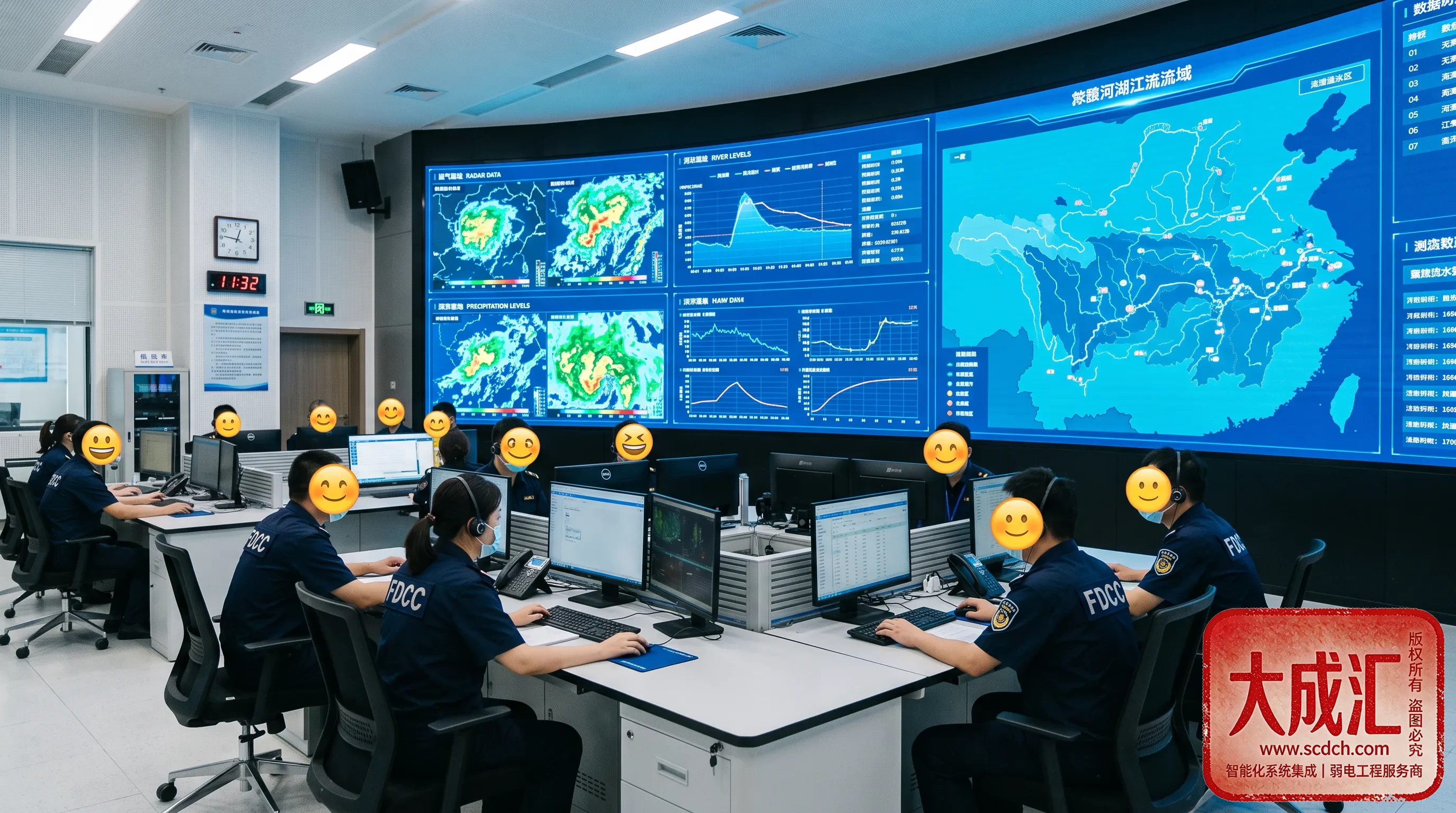
| Platform layer | Waterlogging monitoring platform, one-map view, alert issuance | Real-time storage, risk assessment, alert dispatch, review analysis |
Data from monitoring points is transmitted back via telemetry terminals and consolidated by the platform. When water levels exceed thresholds, pumps are automatically linked and alerts pushed, turning "waiting for rain then dispatching manpower" into "automatic drainage before the rain."
3. Core Monitoring Capabilities
3.1 Rainfall Monitoring
Tipping-bucket/optical rain gauges are deployed in key urban areas to collect rainfall intensity and cumulative rainfall in real time. Combined with radar-based rainfall nowcasting products, they enable short-term rainfall assessment, buying a time window for waterlogging warnings.
3.2 Water Level Monitoring at Rivers and Waterlogging Points
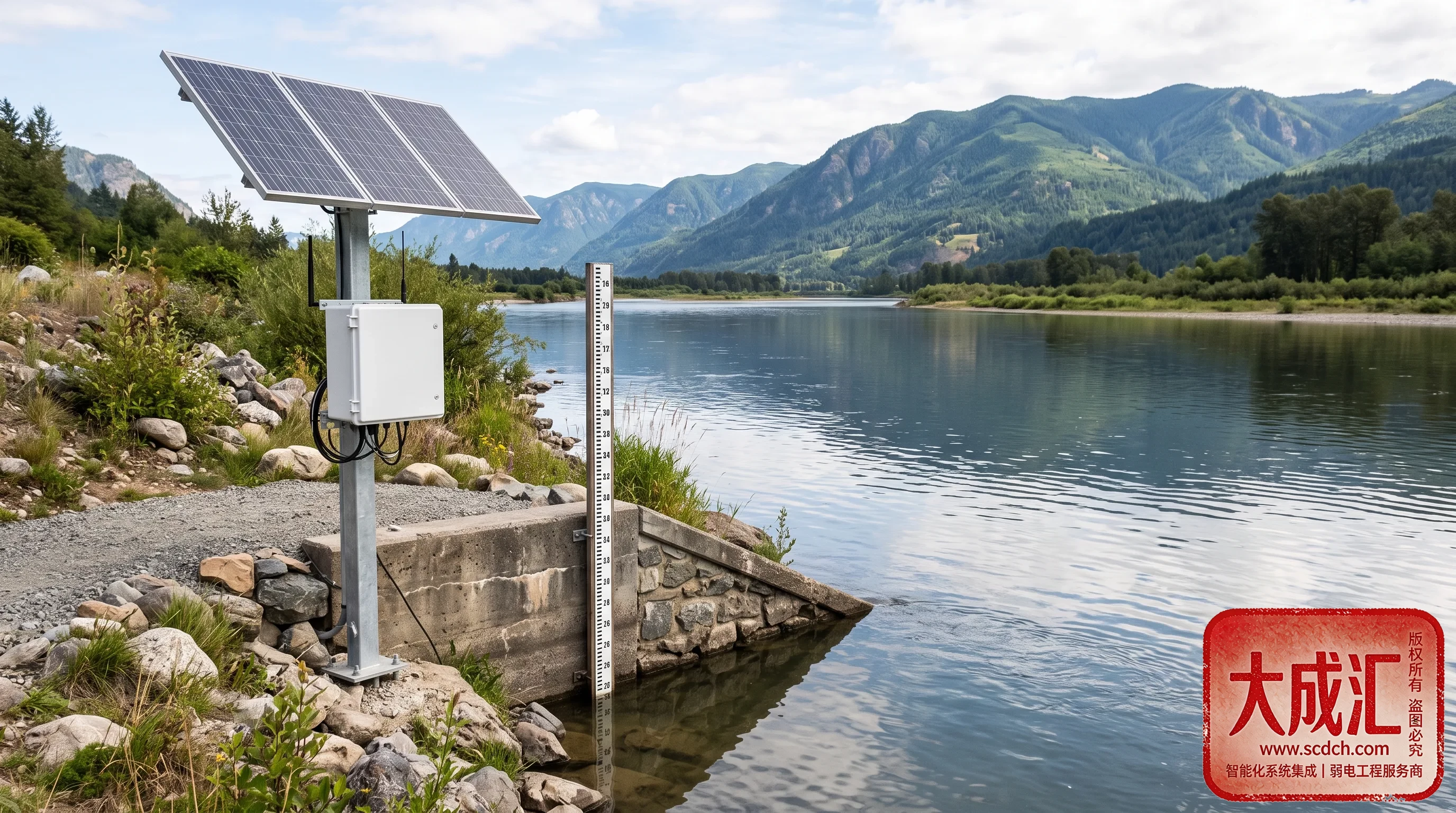
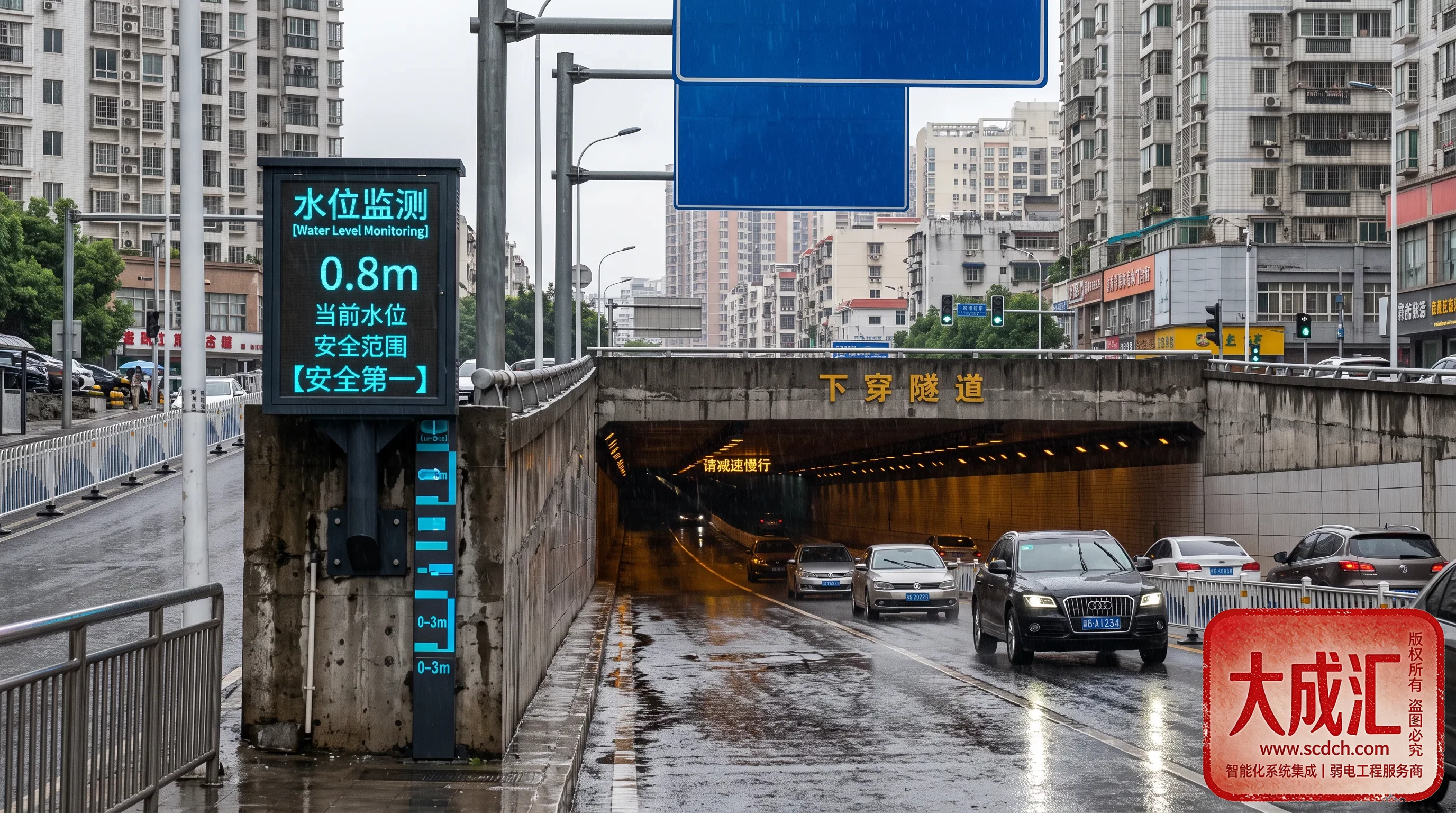
Electronic water gauges and radar level meters are deployed at urban rivers, underpass tunnels and low-lying roads to monitor water level changes in real time. Threshold crossings automatically trigger alerts; tunnel entrances simultaneously activate audio-visual warnings and barriers to prevent vehicles from entering flooded areas.
3.3 AI Video Recognition of Waterlogging Points
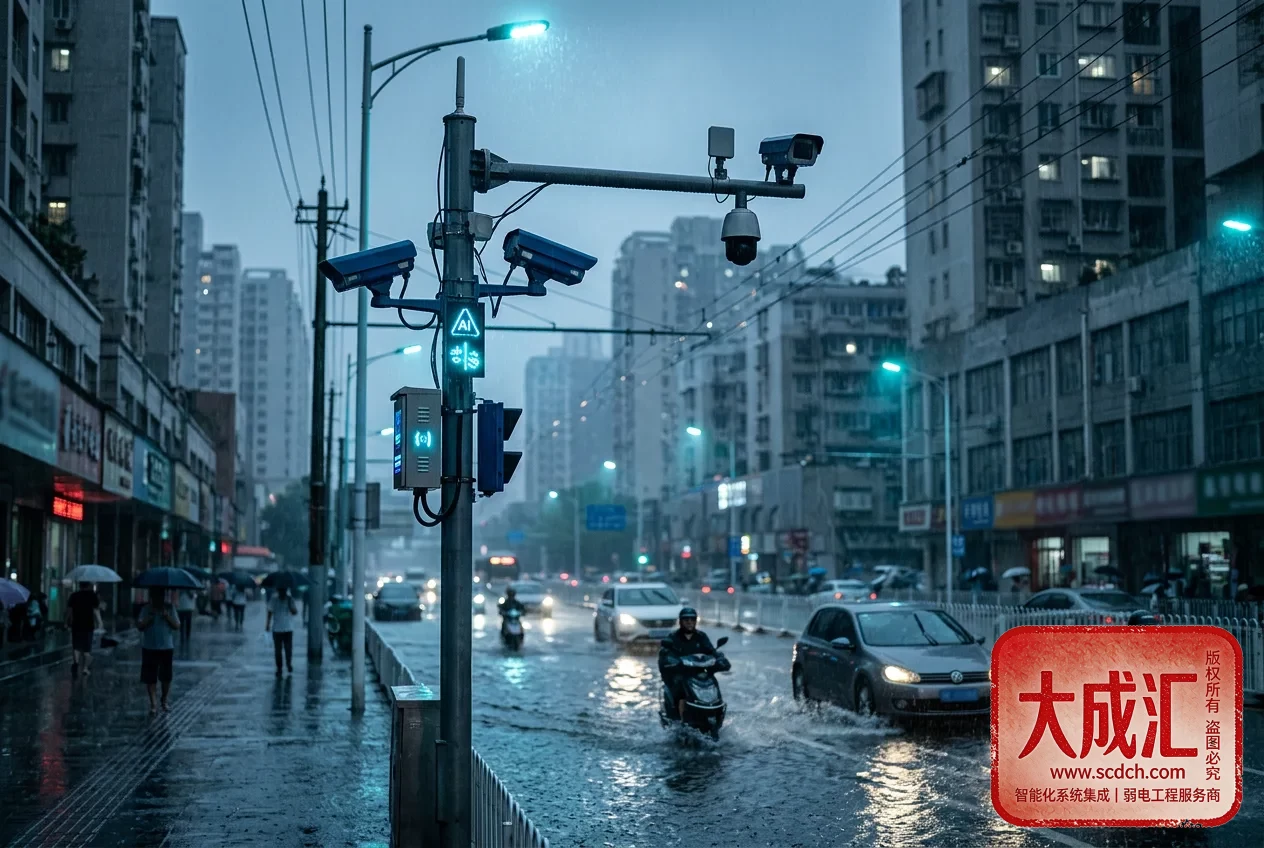
Video surveillance is deployed at historically flood-prone points, where AI image recognition automatically determines the flooded area and water depth level. Dual validation with level meters reduces false alarms. Video evidence is retained to provide direct evidence for emergency dispatch and post-event review.
3.4 Drainage Pump Station Linkage
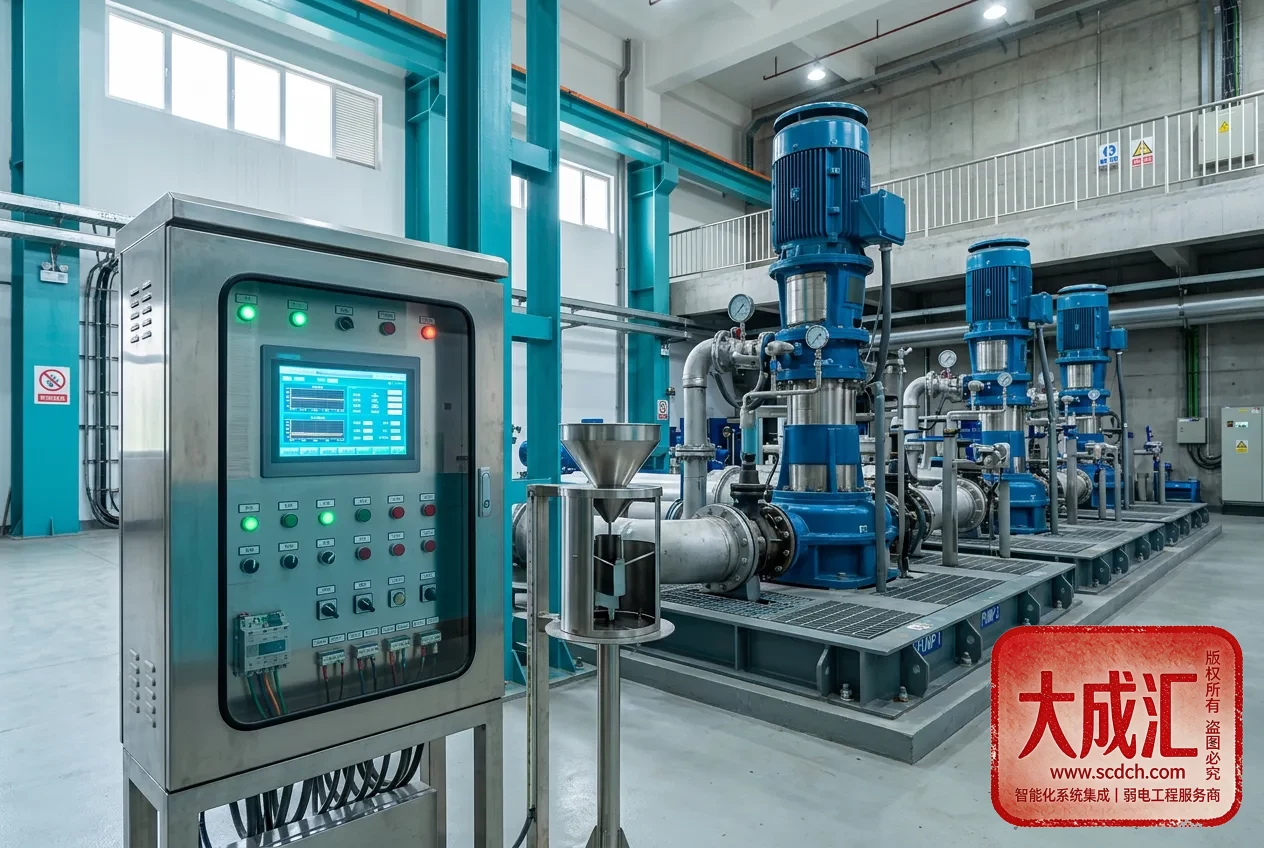
Pump opening, pump group conditions and power consumption are monitored remotely. When water levels exceed thresholds, the system automatically links pump start/stop and gate open/close, forming an automated "monitoring–assessment–response" closed loop. Pump failures trigger real-time alerts, keeping drainage capacity online.
4. Typical Application Scenarios
- Urban underpass tunnels: Automatic waterlogging monitoring with linked warnings prevents vehicles from entering;
- Low-lying roads: Dual validation of water level plus video for precise alerts;
- Urban rivers: River level linked with gates and sluices to pre-lower levels and free storage;
- Drainage pump stations: Remote condition monitoring and automatic linkage improve drainage response efficiency.
5. Compliance and Standards
Urban flood control and drainage monitoring must align with national and industry standards; DCH implements them from design through acceptance:
- GB 50014 Code for Design of Outdoor Wastewater Engineering;
- Requirements of the Sponge City Construction Technical Guide;
- SL 723 Standard for Waterlogging Control;
- Requirements for urban waterlogging prevention and flood emergency response plans;
- Compliance requirements for video surveillance and data security.
6. Why Choose DCH
As a local service provider with over 10 years of expertise in intelligent system integration, DCH delivers differentiated capabilities in urban flood control projects:
- Full-stack integration: Weak-current works, PLC control, communication links and video AI are designed from one source, avoiding multi-vendor disputes;
- Full-lifecycle service: From point survey, equipment installation and commissioning to flood-season duty;
- Industry compliance: Familiar with drainage design, waterlogging control standards and flood plans; benchmarkable and auditable;
- Local response: Rapid on-site support across Sichuan and Southwest China, with 24-hour emergency response in the storm season;
- Proven cases: Serving many municipal, water and emergency authorities with reusable delivery experience.
Together we achieve greatness and pool excellence. Guided by the philosophy of "innovation, integrity, professionalism and collaboration," DCH turns every rainstorm into a city safety line with early warnings, fast response and less waterlogging.
7. Construction Essentials and Common Considerations
- Point placement: Prioritize historically flood-prone points, underpass tunnels and low-lying roads, covering key river sections as well;
- Dual validation: Water level plus AI video cross-validation reduces false and missed alarms;
- Pump linkage: Link with drainage pumps and gates; water level threshold crossings automatically start/stop pumps;
- Communication and power: Low-power telemetry terminals with solar/mains dual options for field points;
- Warnings reaching people: Alerts are pushed to command platforms, duty staff and the public in parallel;
- Data review: Full trails of rainfall–waterlogging–drainage support continuous improvement of waterlogging control.
8. FAQ
Q1: How are waterlogging points selected?
Prioritize historically flood-prone points, underpass tunnels and low-lying roads, determined with waterlogging risk assessment and rainfall-runoff analysis. Cover high-risk zones first, then densify gradually.
Q2: Are both level meters and AI video needed?
Both are recommended. Level meters provide precise values and AI video provides direct images; dual-source validation significantly reduces false alarms, and video also preserves evidence for review.
Q3: Can water level threshold crossings automatically trigger drainage?
Yes. The system links with drainage pumps and gates: when water levels reach thresholds, pumps start or gates open automatically, forming an automated "monitoring–assessment–response" closed loop.
Q4: Who receives the alerts?
Alerts are pushed to flood-control command platforms, duty staff and the public (SMS/App) in parallel. Points such as tunnel entrances additionally trigger audio-visual warnings and barriers for multi-channel coordination.
For solution design or on-site survey tailored to a specific city area or flood-prone point, please contact the DCH intelligent system integration team for free preliminary consulting and point planning.