Wireless Intercom and Emergency Communication
Stay connected when it matters most — reliable command and dispatch.
Wireless intercom and emergency communication is an emergency communication system combining digital trunking and public-network intercom (PoC). With over 10 years of experience in communications and security integration, Sichuan DCH Technology (DCH) integrates capabilities such as PDT/DMR digital trunking, PoC, emergency broadcasting, Mesh ad-hoc networks and converged communication dispatch, delivering full-lifecycle services from frequency planning and site construction to dispatch platform handover, so command and dispatch are "efficient in group calls, reliable in signal and orderly in command" at critical moments.
1. Background and Value
Large-event security, emergency rescue and park operations demand instant communication and unified dispatch. Public-network intercom relies on carrier signal; private trunking involves higher investment. With a single communication method, dropping offline at a critical moment directly weakens command effectiveness.
For security and emergency management departments, wireless intercom and emergency communication delivers the following value:
- Instant reach: One-touch group calls and broadcast calls deliver orders in seconds;
- Reliable signal: Private trunking protects key areas; public/private networks complement each other;
- Unified dispatch: A converged platform interconnects systems for one-command networks;
- Emergency fallback: Mesh ad-hoc networks and emergency broadcasting keep communication alive in extreme scenarios.
2. Overall Architecture: A Three-Layer Trunking–Intercom–Dispatch Communication System
DCH breaks the system into a "trunking–intercom–dispatch" three-layer architecture building a reliable command link:
| Layer | Components | Key Capabilities |
|---|---|---|
| Trunking layer | PDT/DMR digital trunking, base stations and repeaters, frequency planning | Private coverage, group/broadcast calls, signal redundancy |
| Intercom layer | Digital intercom terminals, PoC, emergency broadcasting | Reliable terminals, public/private complementarity, broadcast alerts |
| Dispatch layer | Converged communication dispatch platform, Mesh ad-hoc networks, GIS positioning | Cross-system interconnection, visual dispatch, plan linkage |
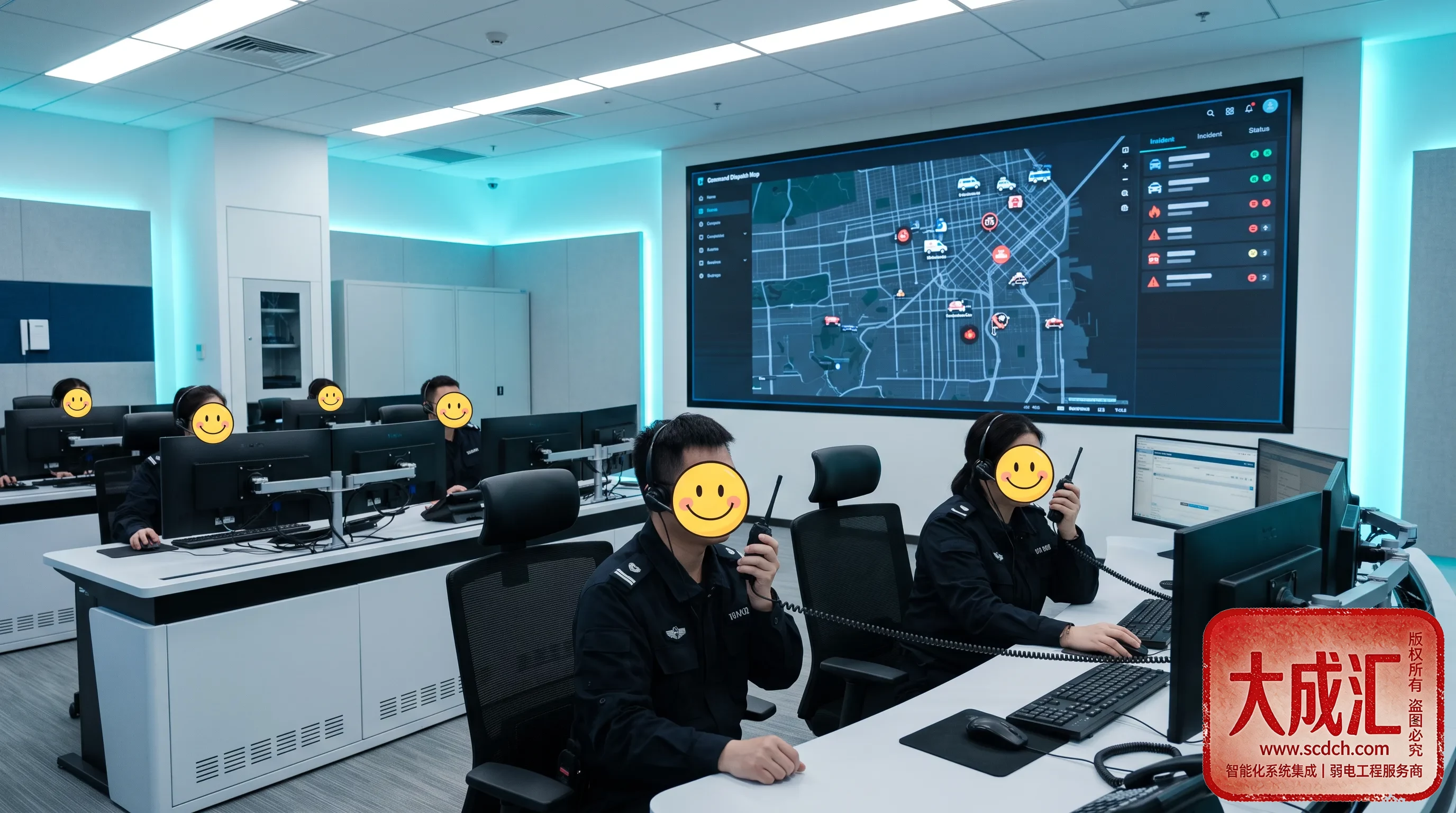
From trunking to intercom to dispatch, the system is planned and delivered as an integrated whole. The command center views personnel positions and communication status on one screen via the dispatch platform, turning scattered "walkie-talkies" into a coordinated "command network."
3. Core Systems and Key Points
3.1 PDT/DMR Digital Trunking
For large parks and event security, PDT/DMR digital trunking is built for group calls, broadcast calls, emergency calls and GPS positioning; base stations and repeaters are planned by coverage needs with signal redundancy in key areas.
3.2 Public-Network Intercom (PoC)
PoC supplements coverage gaps and cross-region scenarios, leveraging carrier networks for wide-area intercom, complementing private trunking with controlled cost and flexible deployment.

3.3 Emergency Broadcasting
An emergency broadcasting system lets the command center issue voice and text alerts to zones or the whole site, combining with intercom for "instructions to people, broadcast to the whole area" and improving emergency response efficiency.
3.4 Mesh Ad-Hoc Networks and Converged Dispatch
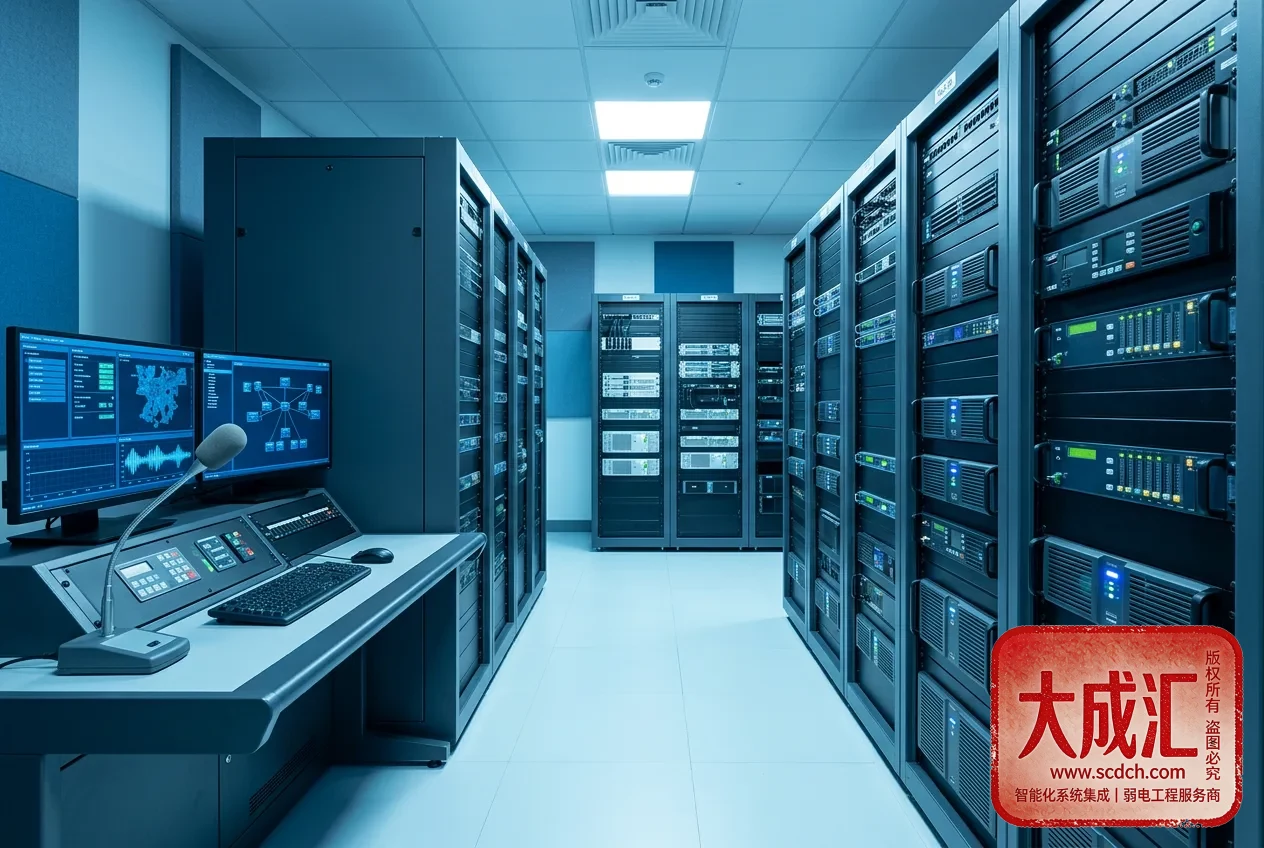
For temporary emergency scenarios, Mesh ad-hoc networks form communication without a central base station, serving as fallback in extreme scenarios. The converged communication dispatch platform interconnects intercom, broadcasting, telephony and video, with GIS positioning and one-screen dispatch, supporting plan linkage and full recording.
4. Typical Application Scenarios
- Large-event security: On-site group calls, zonal broadcasting and visual dispatch for unified command;
- Emergency rescue: Mesh fallback plus multi-department converged communication keeping command links alive;
- Park operations: Patrol intercom plus work-order linkage for efficient handling;
- Transport hubs: Station intercom, broadcasting and video linkage for orderly passenger flow and emergency response.
5. Compliance and Standards
Wireless intercom and emergency communication must align with national requirements; DCH implements them per specifications from design through acceptance:
- GB 50348 Technical Code for Engineering of Security and Protection System;
- Requirements for radio frequency management and station licensing;
- Codes for emergency communication and large-event security;
- Relevant technical standards for digital trunking (PDT/DMR).
6. Why Choose DCH
As a local service provider with over 10 years of expertise in intelligent system integration, DCH delivers differentiated capabilities in wireless intercom and emergency communication projects:
- Full-stack integration: Trunking, intercom, broadcasting and dispatch are designed from one source, avoiding multi-vendor disputes;
- Full-lifecycle service: From frequency planning, site construction and terminal configuration to dispatch platform;
- Compliance assurance: Familiar with radio frequency management and emergency communication codes;
- Local response: Rapid on-site support across Sichuan and Southwest China, with on-site support for large events;
- Proven cases: Serving many security, emergency and park projects with reusable delivery experience.
Together we achieve greatness and pool excellence. Guided by the philosophy of "innovation, integrity, professionalism and collaboration," DCH turns every channel into a command artery that is heard, dispatched and never cut off when it matters most.
7. Construction Essentials and Common Considerations
- Public/private complementarity: Private trunking protects key areas; public networks fill coverage gaps;
- Signal coverage testing: Test key areas one by one to ensure no communication dead zones;
- Dispatch interconnection: Converge intercom, broadcasting, telephony and video for one-command networks;
- Emergency fallback: Mesh ad-hoc networks plus emergency broadcasting stay connected in extreme scenarios;
- Plan linkage: Bind intercom groups to emergency plans for one-touch response process switching;
- Data retention: Full dispatch and call records retained for review and audit.
8. FAQ
Q1: How to choose between PoC and private trunking?
Use private trunking (PDT/DMR) for key areas and high-reliability scenarios; use PoC for wide-area, cost-sensitive scenarios. The two complement each other for coverage, balancing reliability and cost.
Q2: What about signal dead zones?
Conduct coverage testing to locate dead zones, then fill them with additional base stations/repeaters or Mesh ad-hoc networks; large events use mobile base stations to reinforce key areas.
Q3: Can multiple departments interoperate?
Yes. The converged dispatch platform interconnects intercom, telephony and video; departments make group calls by permission under unified command.
Q4: Will communication survive power/network outages?
Private trunking and Mesh ad-hoc networks do not depend on the public network; backup power protects key sites during outages, providing communication fallback in extreme scenarios.
For detailed wireless intercom and emergency communication solution design tailored to a specific scenario, please contact the DCH intelligent system integration team for free preliminary consulting and frequency planning advice.