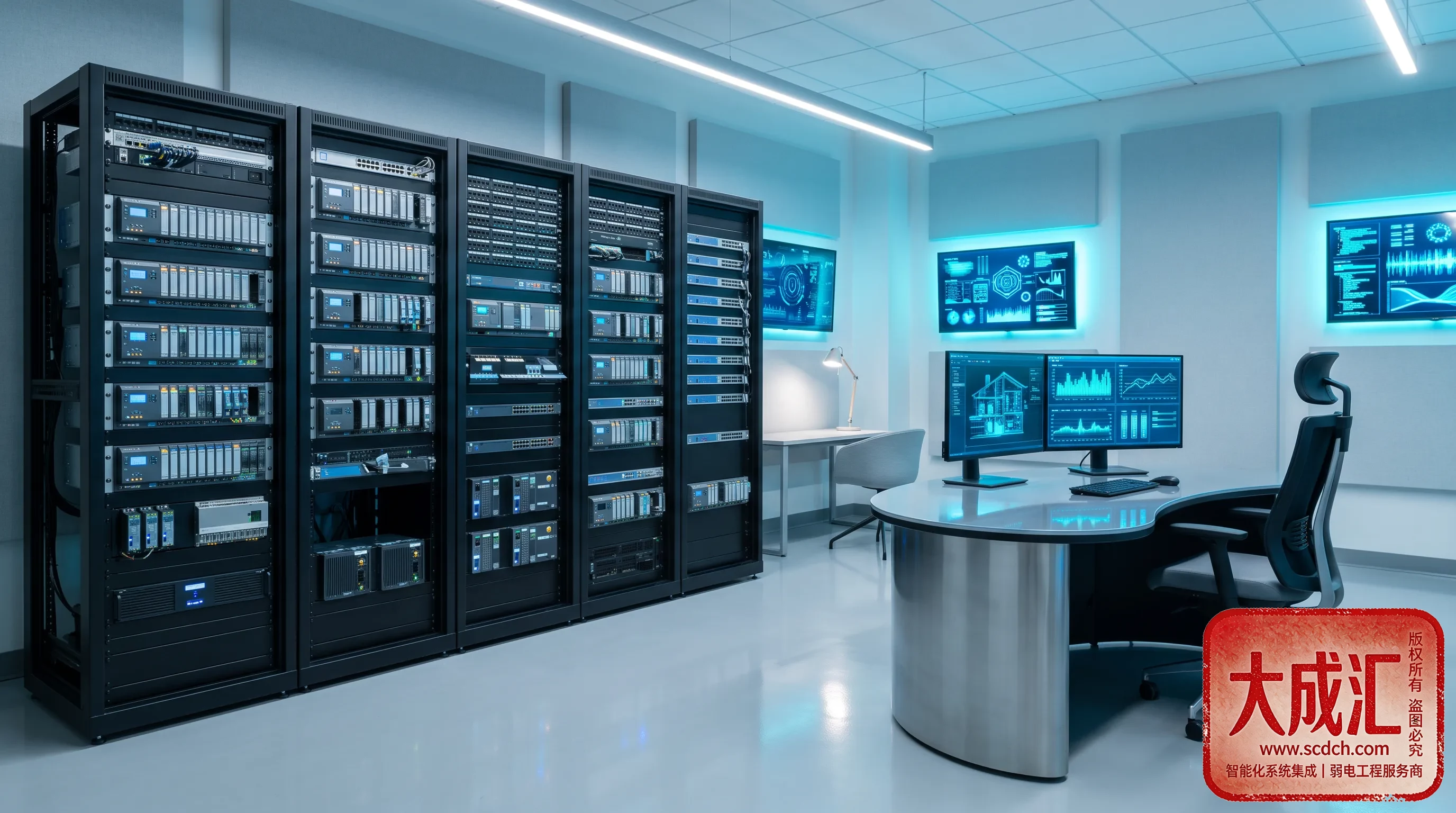
Building Automation and Energy Saving
BA unifies HVAC and lighting for comfort and low carbon together.
Building Automation and energy saving (BA) is an integrated HVAC, lighting and energy management system built around DDC controllers. With over 10 years of experience in intelligent systems and electromechanical control, Sichuan DCH Technology (DCH) integrates capabilities such as DDC controllers, BACnet/Modbus protocols, HVAC optimization, lighting presence sensing and an energy metering platform, delivering full-lifecycle services from solution design, control programming and commissioning to platform handover, so buildings are "controllable, energy-saving and more comfortable."
1. Background and Value
HVAC and lighting are the main sources of building energy consumption. Traditional manual management and fixed operation suffer from serious waste, lagging adjustment and difficulty detecting anomalies; green, low-carbon and "dual carbon" goals impose clear requirements on building energy saving.
For project owners and property operators, building automation and energy saving delivers the following value:
- Comfort and stability: HVAC adjusts on demand, keeping indoor temperature and humidity comfortable and constant;
- Energy savings: Lighting presence sensing plus HVAC optimization significantly cut energy use;
- Smart O&M: Real-time equipment status monitoring with timely anomaly alerts;
- Low-carbon compliance: Meterable, analyzable energy data supports energy-saving certification.
2. Overall Architecture: A Three-Layer Sensing–Control–Platform Automation System
DCH breaks building automation into a "sensing–control–platform" three-layer architecture that ensures device reliability and emphasizes efficiency optimization:
| Layer | Components | Key Capabilities |
|---|---|---|
| Sensing layer | Temperature/humidity, CO₂, illumination, flow sensors | Real-time collection of environment and energy parameters |
| Control layer | DDC controllers, BACnet/Modbus, actuators | Logic control, protocol access, equipment linkage |
| Platform layer | BA management platform, energy metering platform | Centralized monitoring, strategy optimization, energy analysis |
From sensing to control to platform, the system is planned and delivered as an integrated whole. Property teams monitor equipment and energy remotely via the BA platform, turning scattered "devices" into a coordinated "energy-saving system."
3. Core Systems and Key Points
3.1 DDC Controllers and Protocol Access
DDC controllers perform local control of HVAC, lighting and other equipment, and connect to upper platforms via BACnet/Modbus protocols, supporting interoperability with third-party devices.
3.2 HVAC Optimization
Air handling units, fresh air and pumps implement on-demand control and optimization: operation is adjusted by temperature, humidity, CO₂ and occupancy periods; load is automatically reduced at night and on weekends, balancing comfort and energy saving.
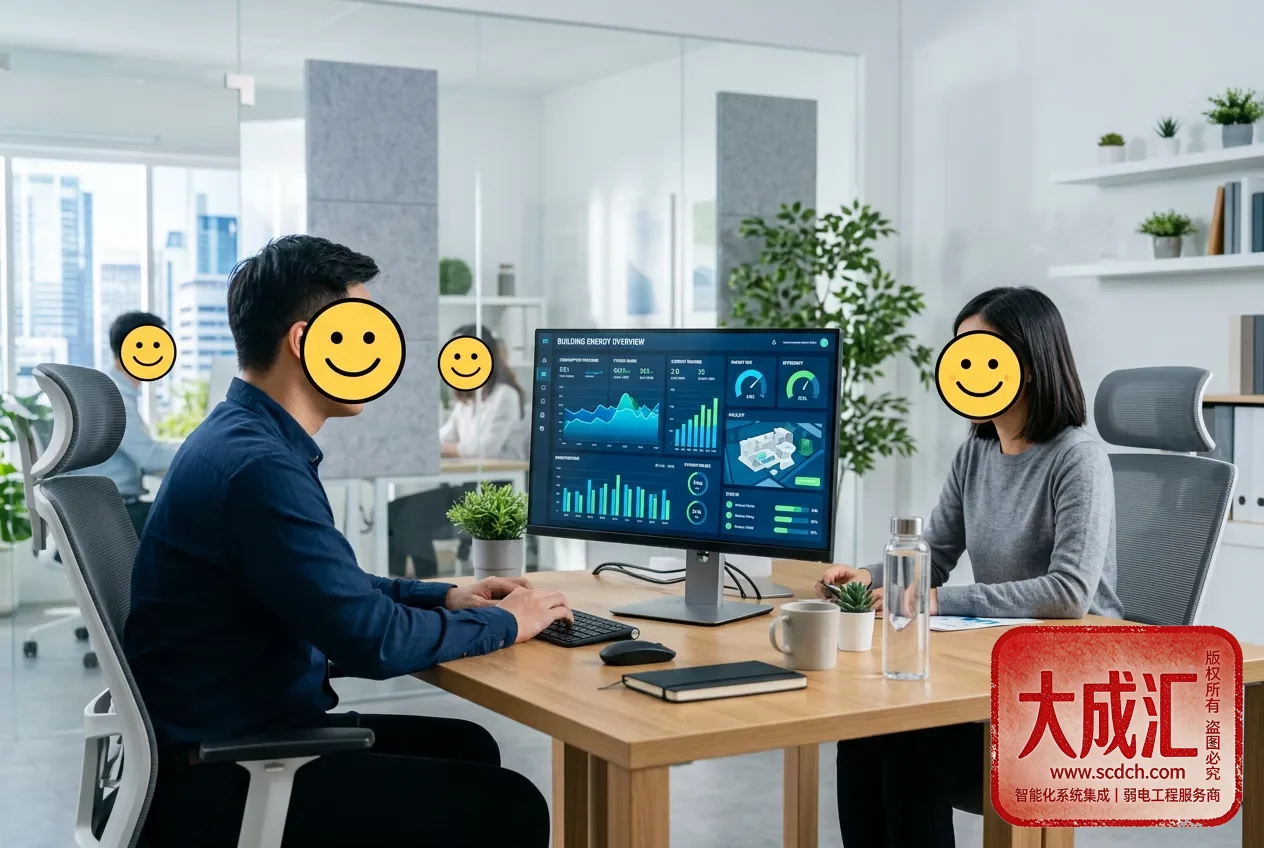
3.3 Lighting Presence Control
Public areas use lighting presence control with occupancy/light sensing — lights dim or switch off automatically when unoccupied. Office areas adjust by schedule and natural daylight, balancing energy saving and experience.
3.4 Energy Metering Platform
An energy metering platform provides sub-metered electricity, water and gas with zonal and time-based statistics. Energy data is visualized and analyzed; abnormal usage triggers automatic alerts, supporting energy diagnosis and continuous improvement.
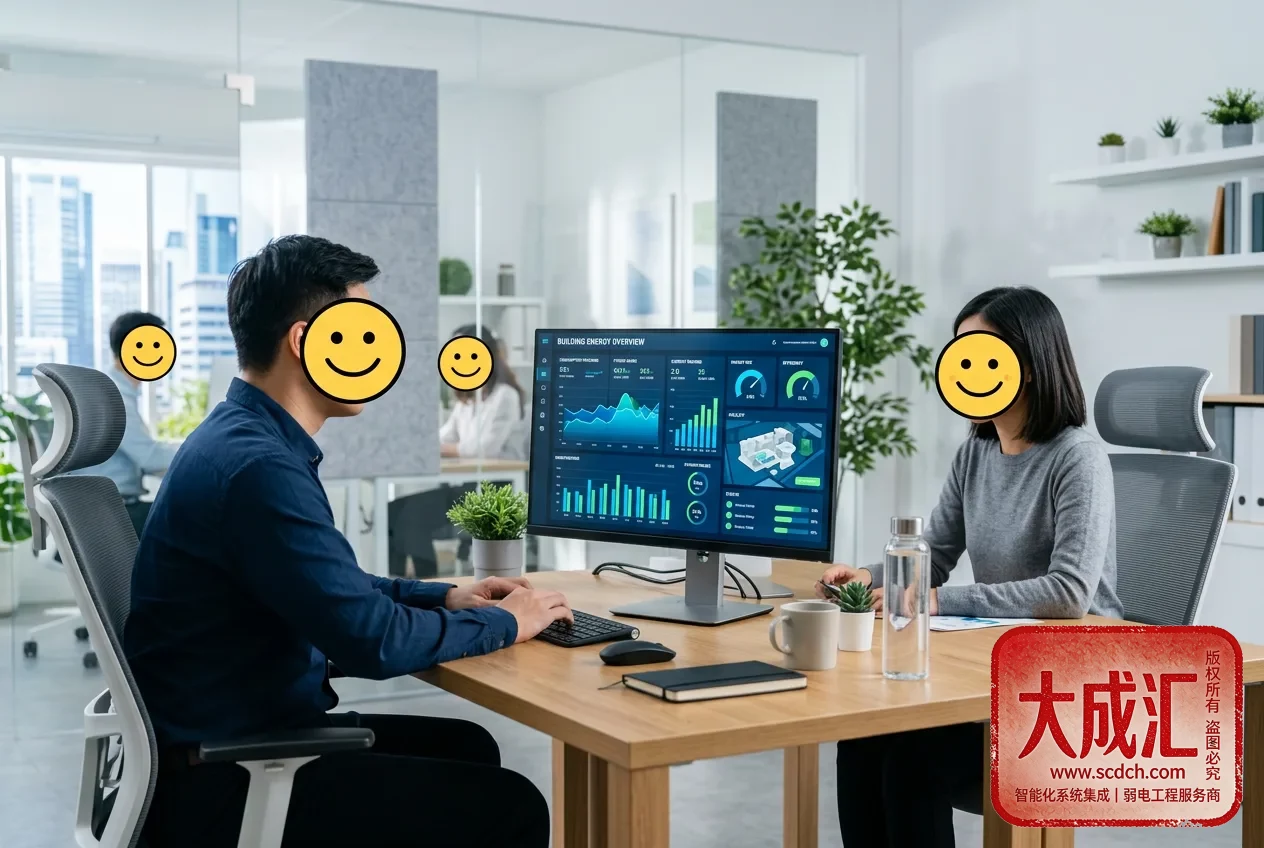
4. Typical Application Scenarios
- Office buildings: Linked HVAC and lighting control balancing comfort and energy saving;
- Campuses/parks: Centralized BA management of multiple buildings with unified energy analysis;
- Hospitals: Temperature, humidity and clean-room control in critical areas for medical environments;
- Hotels: On-demand adjustment in rooms and public areas balancing efficiency and experience.
5. Compliance and Standards
Building automation and energy saving must align with national standards; DCH implements them from design through acceptance:
- GB 50314 Standard for Design of Intelligent Building;
- GB/T 23331 Energy Management Systems;
- GB 50189 Design Standard for Energy Efficiency of Public Buildings;
- Requirements for building energy efficiency assessment and green buildings.
6. Why Choose DCH
As a local service provider with over 10 years of expertise in intelligent system integration, DCH delivers differentiated capabilities in building automation projects:
- Full-stack integration: Weak-current, control, metering and platform systems are designed from one source, avoiding multi-vendor disputes;
- Full-lifecycle service: From solution design, control programming and commissioning to energy-saving optimization;
- Energy expertise: Meter first, then optimize; strategies fit actual operations;
- Local response: Rapid on-site support across Sichuan and Southwest China;
- Proven cases: Serving many building, campus and hospital projects with reusable delivery experience.
Together we achieve greatness and pool excellence. Guided by the philosophy of "innovation, integrity, professionalism and collaboration," DCH turns every building into an automated space that is controllable, energy-saving and more comfortable.
7. Construction Essentials and Common Considerations
- Meter first, then optimize: Build energy metering first, then develop energy-saving strategies based on data;
- Comfort thresholds: Setpoints balance energy saving and comfort, avoiding over-adjustment that hurts experience;
- Seasonal strategies: Adjust control strategies by season and operating period;
- Protocol compatibility: BACnet/Modbus compatibility with third-party devices avoids lock-in;
- Anomaly alerts: Automatic alerts for equipment and energy anomalies with closed-loop response;
- Energy verification: Before/after comparison analysis drives continuous optimization.
8. FAQ
Q1: How much energy can a BA system save?
It depends on the building and current operation. Linked HVAC and lighting control typically achieves a 10%–25% energy reduction; specific results need metering diagnosis and assessment first.
Q2: Can existing third-party equipment be connected?
Yes. The BA platform supports standard protocols such as BACnet/Modbus and can integrate existing HVAC, elevator, lighting and other devices, avoiding duplicate investment.
Q3: Will it save energy automatically at night and on weekends?
Yes. Air conditioning and lighting loads are automatically reduced per schedule; unoccupied areas shut off or dim automatically, with flexible holiday strategies.
Q4: How is the energy-saving effect verified?
Through before/after comparison on the energy metering platform, corrected for weather and operating days, an energy-saving assessment report supports continuous optimization.
For detailed building automation and energy-saving solution design tailored to a specific building, please contact the DCH intelligent system integration team for free preliminary consulting and energy diagnosis.