Standard Clock System
Unified time keeps every device in sync — the invisible "time base" of the intelligent building.
A standard clock system is a unified time synchronization system for intelligent buildings and campuses. With over 10 years of experience in intelligent system integration and communication engineering, Sichuan DCH Technology (DCH) integrates NTP time servers, BeiDou/GPS satellite time sources, time display clocks and PoE time terminals, delivering full-lifecycle services from clock network design, device installation and commissioning to platform maintenance, so that all systems and public areas run on one synchronized time "—accurate, consistent and traceable."
1. Background and Value
In modern buildings, many systems (access control, attendance, alarm, recording, broadcasting) need a consistent time reference. A clock discrepancy of even a few seconds can cause inaccurate records, mismatched alarms and disputes. A standard clock system provides the authoritative time base for all systems.
For owners and O&M teams, the standard clock system delivers the following value:
- Accurate time: NTP synchronization keeps device errors at the millisecond level;
- Consistent records: Unified time across systems makes logs, evidence and billing comparable;
- Automatic correction: Time auto-syncs after power outages, requiring no manual adjustment;
- Reliable operation: Networked management and monitoring reduce maintenance workload.
2. Overall Architecture: Time Source–Distribution–Application Three-Layer System
The standard clock system uses a "time source–distribution–application" three-layer architecture:
| Layer | Components | Key Capabilities |
|---|---|---|
| Time source | NTP server, BeiDou/GPS dual satellite reception | Authoritative time, millisecond precision |
| Distribution | LAN NTP distribution, PoE clock network | Network distribution, low-maintenance power |
| Application | Digital/pointer clocks, building system NTP client | Unified display, system time synchronization |
Satellite time is received by the NTP server and distributed over the LAN; clocks and building systems synchronize automatically. A unified management platform enables real-time status monitoring of every clock.
3. Core Components and Key Points
3.1 NTP Time Server
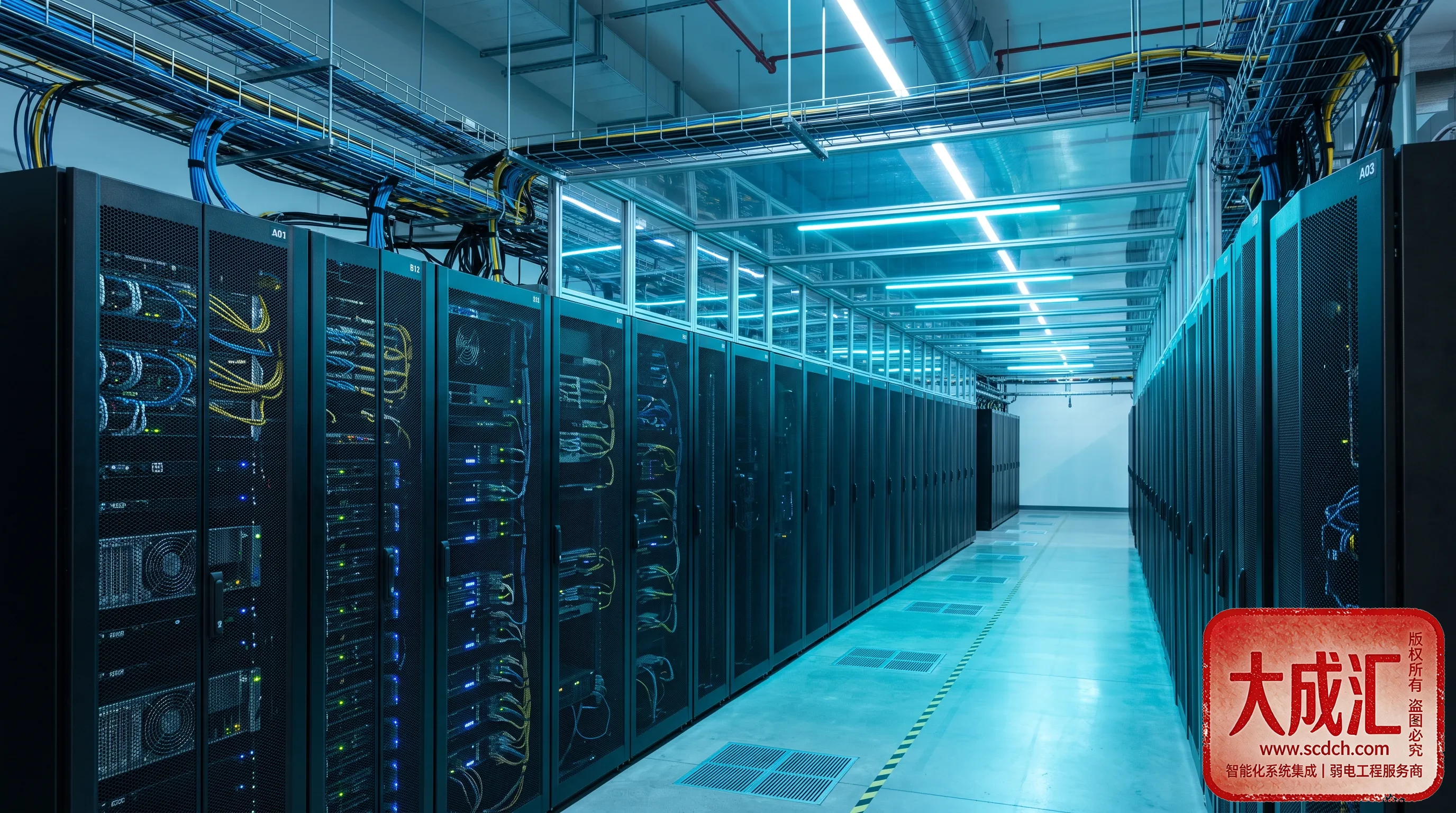
The NTP time server receives BeiDou/GPS dual satellite signals as the authoritative time source, provides millisecond-level NTP service over the LAN, and automatically switches sources for redundancy.
3.2 Satellite Time Source
BeiDou/GPS dual-mode satellite reception is used; even if one constellation is interrupted, the other continues to provide time, ensuring long-term stable operation.

3.3 Time Display Clocks
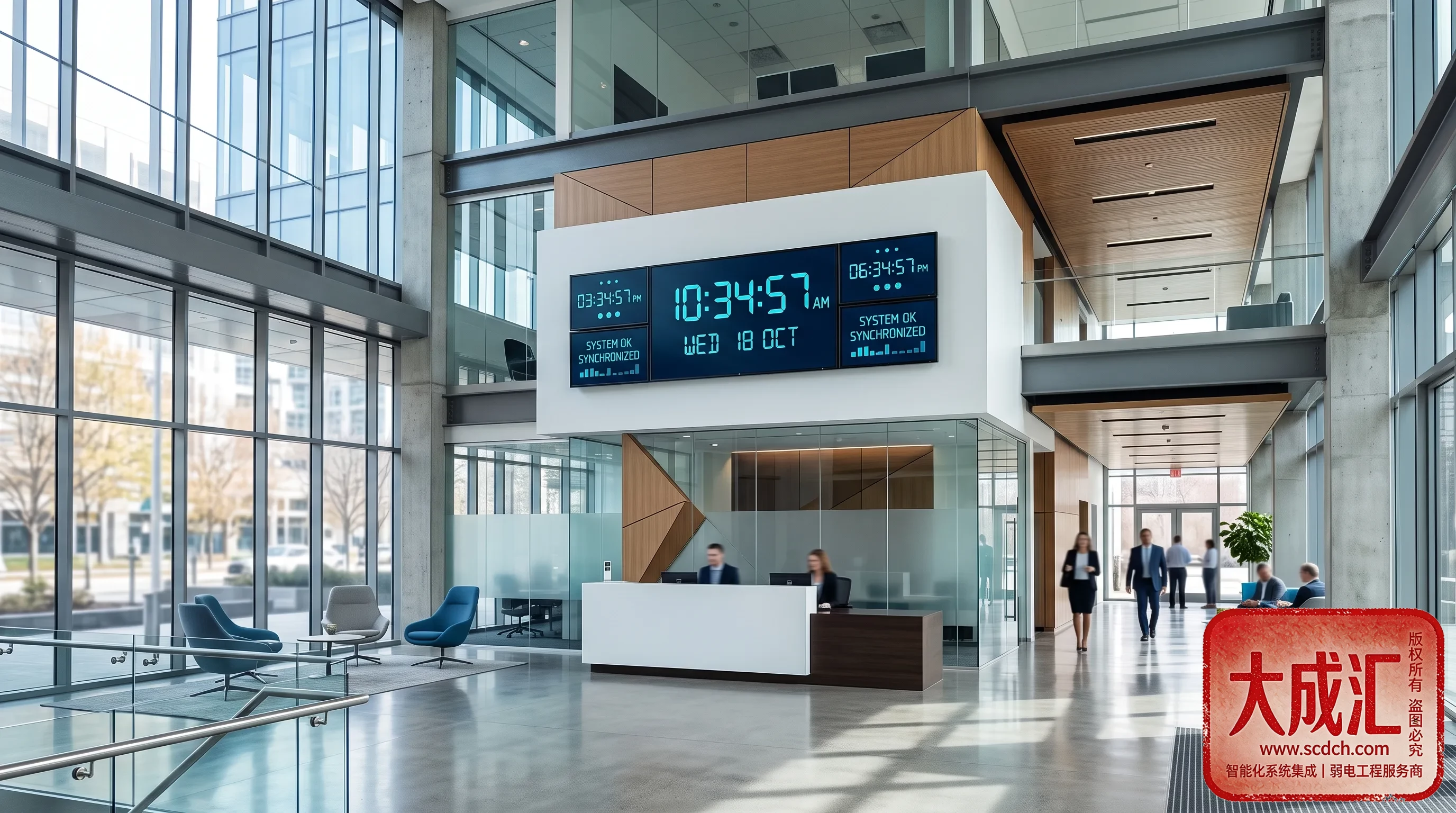
Digital and pointer time display clocks are deployed in lobbies, corridors, offices and public areas, with synchronized display, optional temperature display and automatic light control.
3.4 PoE Time Terminals and Power Supply
PoE time terminals receive both data and power over a single Ethernet cable, eliminating the need for separate power runs and lowering installation and maintenance costs.

3.5 Management and Monitoring Platform
A clock management platform displays the online status, time deviation and fault alarms of all clocks in real time, enabling remote troubleshooting and maintenance.
4. Typical Application Scenarios
- Office buildings: Unified time for office, access control and attendance systems;
- Schools and campuses: Class bell systems and synchronized clocks for teaching;
- Hospitals: Time synchronization for medical record and alarm systems;
- Transportation hubs: Station clocks and train/vehicle schedule time alignment.
5. Compliance and Standards
The standard clock system must align with national and industry standards; DCH implements them from design through acceptance:
- JJG 2023 Verification Regulation of Time Standard Clocks (as applicable);
- Relevant requirements for time synchronization in intelligent building engineering;
- NTP time synchronization protocol standards and specifications;
- Electrical safety requirements for weak-current systems.
6. Why Choose DCH
As a local service provider with over 10 years of expertise in intelligent system integration, DCH delivers differentiated capabilities in standard clock projects:
- Full-stack integration: Clock network, time distribution and building systems are designed from one source, avoiding multi-vendor disputes;
- Full-lifecycle service: From clock network design, installation and commissioning to platform maintenance;
- Compliance assurance: Familiar with time synchronization specifications; acceptance passes on the first attempt;
- Local response: Rapid on-site support across Sichuan and Southwest China;
- Proven cases: Serving many buildings, campuses and public projects with reusable delivery experience.
Together we achieve greatness and pool excellence. Guided by the philosophy of "innovation, integrity, professionalism and collaboration," DCH makes every second accurate, consistent and reliable for every building.
7. Construction Essentials and Common Considerations
- Time source redundancy: Dual BeiDou/GPS reception with automatic source switching;
- Network planning: Time distribution must cover all systems and clocks requiring synchronization;
- Power design: PoE supply reduces cabling; battery backup keeps clocks running during outages;
- Anti-interference: Avoid electromagnetic interference on time distribution links;
- Status monitoring: Online monitoring of every clock for faults and deviations;
- Auto recovery: Clocks auto-sync after power recovery, requiring no manual intervention.
8. FAQ
Q1: How accurate is the clock system?
With satellite time sources and NTP distribution, device errors are typically at the millisecond level, far exceeding the second-level accuracy required by ordinary buildings.
Q2: What if a clock fails?
The management platform alarms in real time for offline clocks or time deviations, supporting remote troubleshooting and rapid on-site replacement.
Q3: Can existing systems be synchronized?
Yes. Building systems supporting NTP can connect directly; systems without NTP can be integrated via protocol gateways or RS485 time distribution.
Q4: Does power outage affect the clocks?
No. Clocks auto-sync upon power recovery; optionally equipped with battery backup, they continue to run during short outages.
For clock network planning or detailed design tailored to a specific building, please contact the DCH intelligent system integration team for free preliminary consulting and time system solutions.