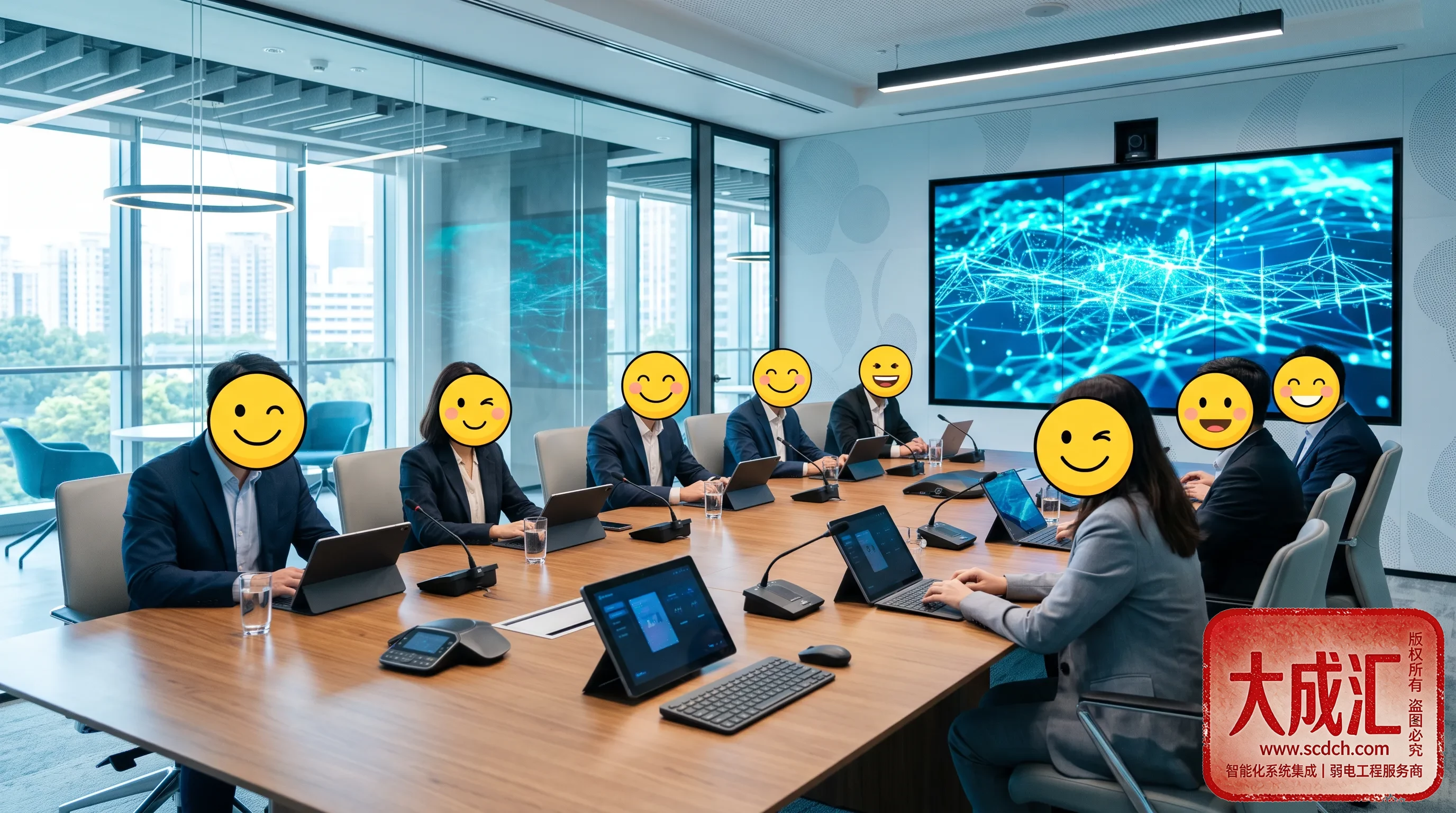
Multimedia Conferencing and Display
Paperless meetings and big-screen presentation — more efficient communication.
Multimedia conferencing and display is a conference and information release system combining paperless meetings, large-screen display and audio-visual integration. With over 10 years of experience in audio-visual and weak-current integration, Sichuan DCH Technology (DCH) integrates capabilities such as paperless conference systems, LED/LCD video walls, distributed audio-visual matrices, video conferencing and intelligent control, delivering full-lifecycle services from solution design, equipment installation and commissioning to handover, so meeting rooms, lecture halls and command halls "meet efficiently, display clearly and control smoothly."
1. Background and Value
Conference and information release scenarios place ever-higher demands on audio-visual quality, collaboration efficiency and unified control. Traditional conferences suffer from complex cabling, independent devices that are hard to unify, and inefficient paper materials.
For project owners and managers, multimedia conferencing and display delivers the following value:
- Efficient consultation: Paperless meetings replace paper materials; shared annotation is more efficient;
- Superb presentation: LED/LCD video walls display clearly and impressively; information release is more eye-catching;
- Unified control: Intelligent control switches scenes with one touch for smooth meeting flows;
- Boundless collaboration: Video conferencing and remote collaboration make cross-region communication efficient.
2. Overall Architecture: A Three-Layer Capture–Transmission–Display Audio-Visual System
DCH breaks multimedia conferencing into a "capture–transmission–display" three-layer architecture that ensures signal reliability and emphasizes unified control:
| Layer | Components | Key Capabilities |
|---|---|---|
| Capture layer | Cameras, microphones, paperless terminals, video conferencing terminals | Audio-visual capture, signal input, collaboration terminals |
| Transmission layer | Distributed audio-visual matrices, network transmission, control systems | Signal dispatch, multi-route switching, low-latency transmission |
| Display layer | LED/LCD video walls, projection, sound reinforcement | Big-screen display, clear amplification, scene linkage |
From capture to transmission to display, the system is planned and delivered as an integrated whole. Administrators switch "presentation/discussion/video conference" scenes with one touch on the control panel, turning scattered "devices" into a coordinated "conference system."
3. Core Systems and Key Points
3.1 Paperless Conference System
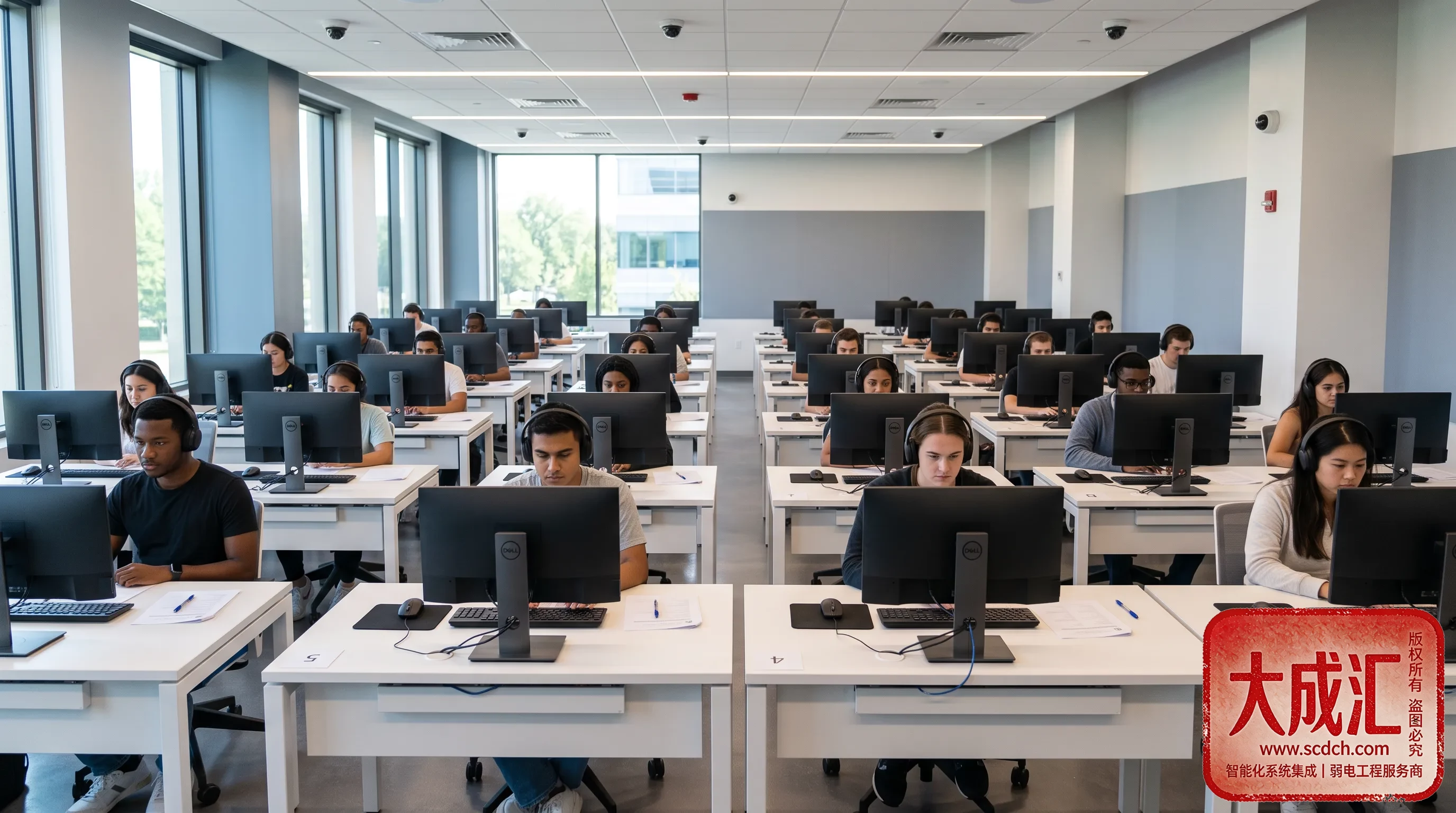
Paperless conference terminals are deployed in meeting rooms, supporting document sharing, electronic annotation, voting and agenda management, replacing paper materials and greatly improving pre-meeting preparation and in-meeting collaboration.
3.2 LED/LCD Video Walls
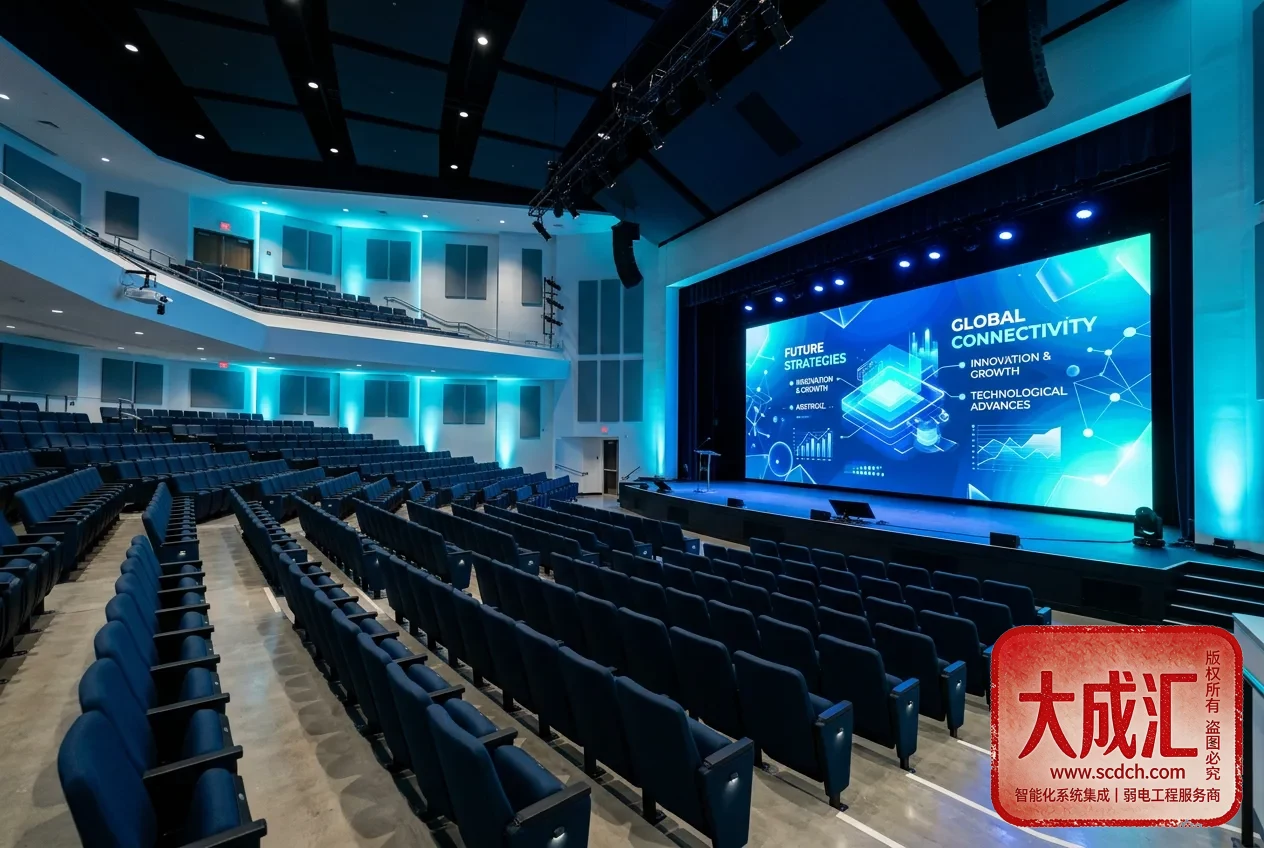
LED or LCD video walls are selected by scenario: seamless LED walls for large spaces and impressive lecture/command hall presentation; LCD walls for close-range, high-precision display. Signals are flexibly dispatched via distributed matrices.
3.3 Distributed Audio-Visual Matrix
A distributed audio-visual matrix enables flexible dispatch and cross-screen distribution of multiple audio-visual signals, supporting windowing, roaming and simultaneous multi-signal display on the large screen; the system is extensible and easy to maintain.
3.4 Video Conferencing and Intelligent Control
Built-in video conferencing connects local meeting rooms with remote venues; automatic camera tracking and echo cancellation ensure a good meeting experience. Intelligent control links lighting, curtains, audio-visual equipment and power with one touch for scenario-based management.
4. Typical Application Scenarios
- Command halls: Multi-signal large-screen presentation for real-time consultation and emergency command;
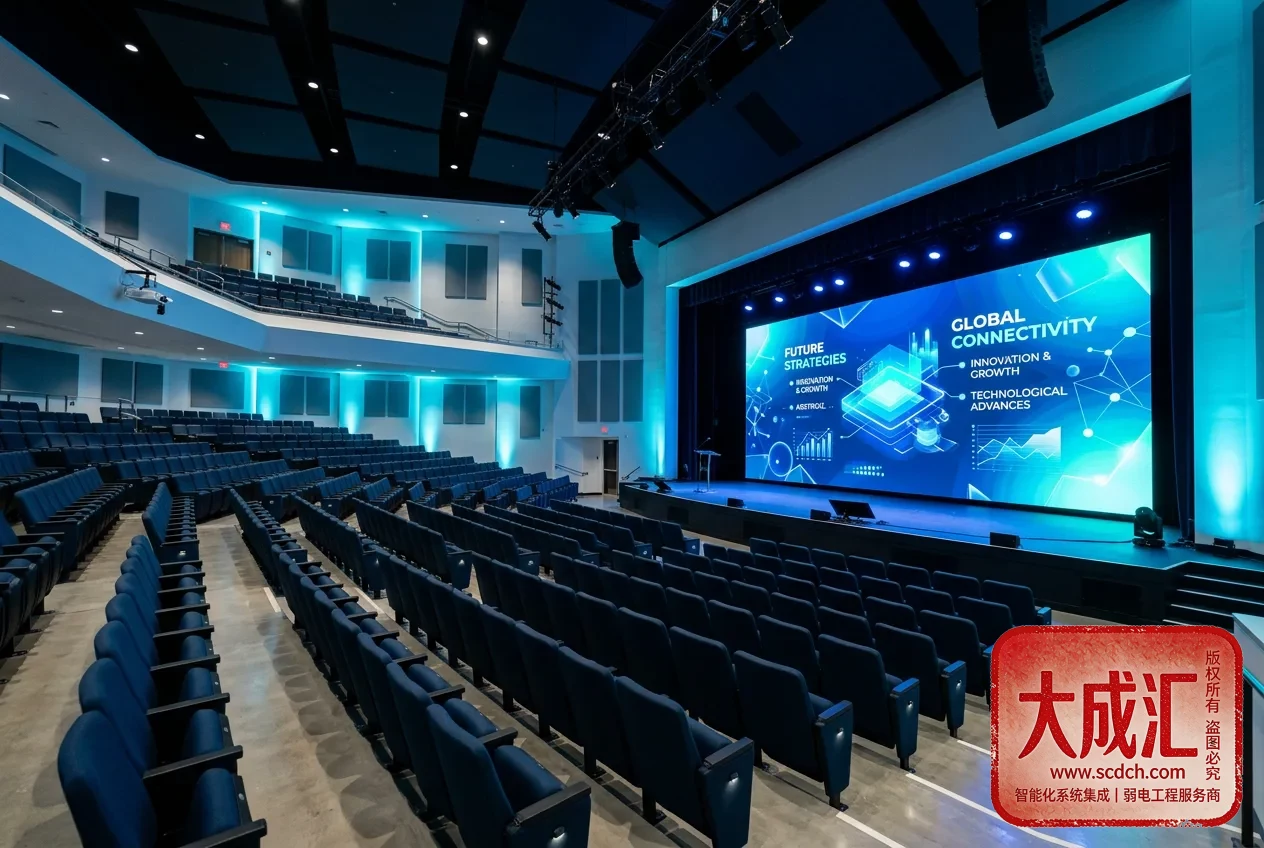
- Lecture halls: LED walls plus sound reinforcement for impressive meetings and events;
- Meeting rooms: Paperless plus video conferencing for efficient collaboration;
- Reception centers: Welcome screens and information release presenting corporate image.
5. Compliance and Standards
Multimedia conferencing and display construction must align with national standards; DCH implements them from design through acceptance:
- GB 50339 Code for Quality Acceptance of Intelligent Building Engineering;
- GB 50314 Standard for Design of Intelligent Building;
- Technical and acceptance specifications for conference and audio-visual systems;
- Safety and quality requirements for display and sound reinforcement systems.
6. Why Choose DCH
As a local service provider with over 10 years of expertise in intelligent system integration, DCH delivers differentiated capabilities in multimedia conference projects:
- Full-stack integration: Display, audio-visual, control and network systems are designed from one source, avoiding multi-vendor disputes;
- Full-lifecycle service: From solution design, equipment installation and commissioning to O&M support;
- Professional tuning: Audio-visual sync, echo prevention and video wall alignment professionally tuned for superb presentation;
- Local response: Rapid on-site support across Sichuan and Southwest China;
- Proven cases: Serving many government/enterprise, command center and university projects with reusable delivery experience.
Together we achieve greatness and pool excellence. Guided by the philosophy of "innovation, integrity, professionalism and collaboration," DCH turns every meeting room into a smart space that meets efficiently, displays clearly and controls smoothly.
7. Construction Essentials and Common Considerations
- Audio-visual sync: Multi-signal sync without tearing; audio-video sync with echo prevention;
- Unified control: One-touch scenario linkage of lighting, curtains, audio-visual and power;
- Signal dispatch: Distributed matrix scales on demand with flexible multi-signal distribution;
- Display selection: Choose LED/LCD by space size and viewing distance;
- O&M spares: Reserve spares and O&M access so meetings never stop;
- Expansion headroom: Reserved interfaces and links support future upgrades.
8. FAQ
Q1: How to choose between LED and LCD video walls?
For large spaces, long viewing distances and seamless splicing, choose LED; for close-range, high-resolution, budget-sensitive needs, choose LCD. DCH recommends by space and purpose.
Q2: What about echo in video conferencing?
Professional audio processing with echo cancellation, camera tracking and ceiling microphones effectively eliminate echo and ensure good remote meeting experience.
Q3: Which devices can the control system operate?
Lighting, curtains, projectors/screens, audio-visual switching, video conferencing and device power can all be included in one-touch scene switching.
Q4: How long does meeting room renovation take?
It depends on area and system complexity, generally phased as "demolition–cabling–installation–commissioning," and can be implemented alongside decoration.
For detailed audio-visual solution design tailored to a specific meeting room or lecture hall, please contact the DCH intelligent system integration team for free preliminary consulting and solution design.