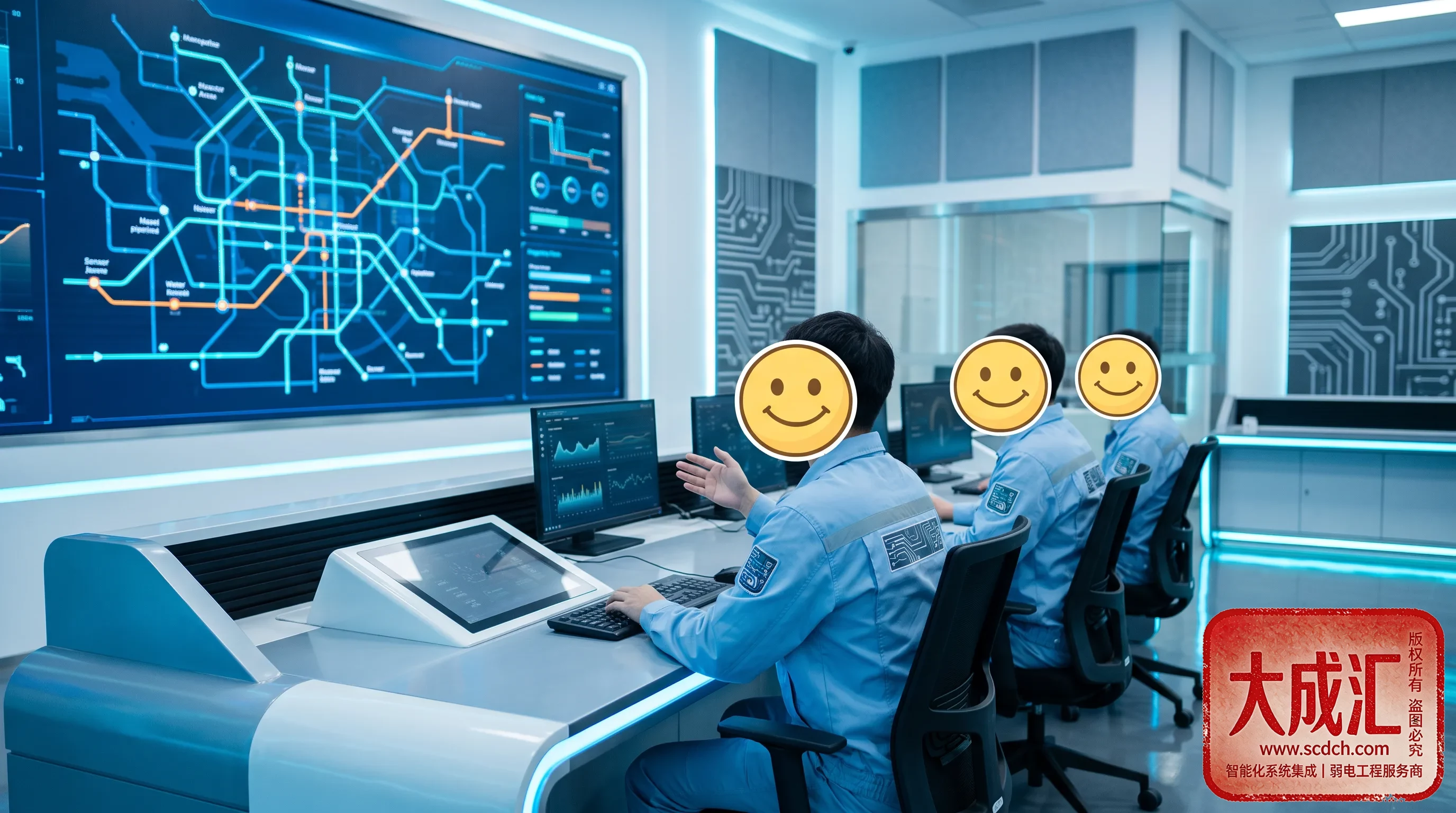
Water Supply Pipeline Safety Monitoring
End-to-end sensing from source to tap: secure supply, lower leakage, prevent pipe bursts.
Water supply pipeline safety monitoring is a smart water system that performs online monitoring and intelligent analysis of pressure, flow and water quality in urban water supply networks. With over 10 years of experience in intelligent system integration and PLC control, Sichuan DCH Technology (DCH) integrates capabilities such as DMA district metering, noise-correlation leak detection, online water quality monitoring and a GIS network one-map view, delivering full-lifecycle projects from zone planning, sensor deployment and equipment installation to platform operation. It helps water utilities achieve leak locating, burst warning and water quality safety control, so every drop "flows steadily, measures accurately and is managed reliably."
1. Background and Value
The water supply network is a city lifeline. Leakage and pipe bursts not only waste water resources but also affect supply safety and urban operation. Housing authorities continue to promote leakage control and smart water supply; utilities commonly face three pain points: leaks are hard to find, pressure is hard to regulate and water quality is hard to trace.
For water utilities and municipal management departments, pipeline safety monitoring delivers the following value:
- Lower leakage: DMA districts quantify leakage, and minimum night flow analysis pinpoints leaks;
- Prevent bursts: Pressure surge warnings and zonal pressure regulation reduce burst risks;
- Secure quality: Online monitoring of residual chlorine, turbidity and pH responds to anomalies in time;
- Improve efficiency: GIS network one-map view plus remote meter reading and dispatch make patrol and repair more efficient.
2. Overall Architecture: A Three-Layer Sensing–Transmission–Platform Network Monitoring System
DCH breaks pipeline safety monitoring into a "sensing–transmission–platform" three-layer architecture that ensures sensor reliability and emphasizes system-level coordination:
| Layer | Components | Key Capabilities |
|---|---|---|
| Sensing layer | Pressure transmitters, flow meters, online water quality analyzers, noise/correlation leak detectors | Collection of pressure, flow, residual chlorine/turbidity/pH and leak signals |
| Transmission layer | Telemetry terminals (RTU), NB-IoT/4G, LoRa edge networking | Low-power remote transmission, breakpoint resume, local field networking |
| Platform layer | Network monitoring platform, DMA zone analysis, GIS one-map view, alerts and work orders | Real-time storage, leakage analysis, over-limit alerts, closed-loop repair |
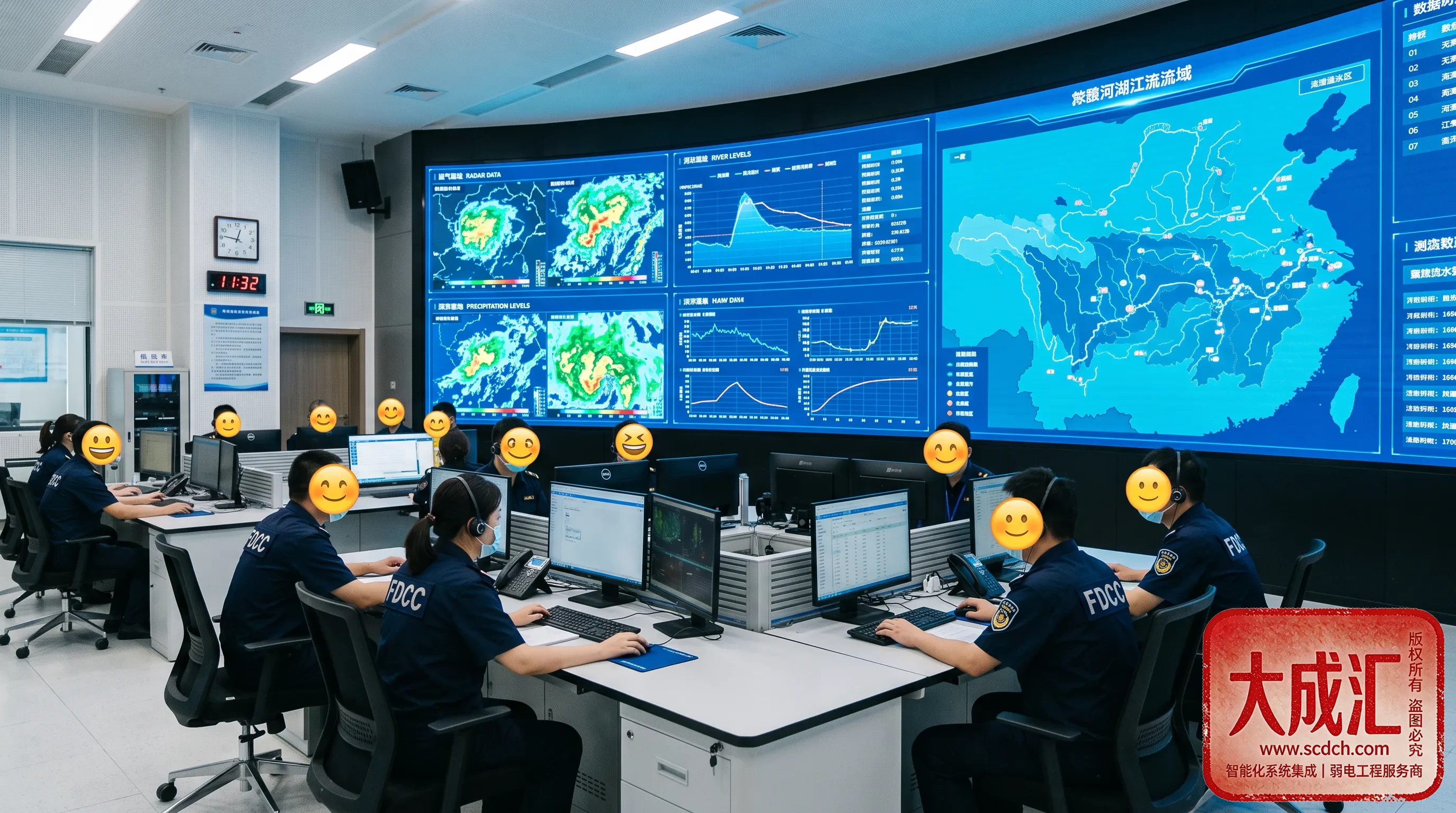
Data from monitoring points is transmitted encrypted via RTU/NB-IoT and consolidated, validated and displayed by the platform. Managers can view zonal leakage rates, network pressure and water quality on a single map, turning scattered "sensors" into a coordinated "network brain."
3. Core Monitoring and Control Capabilities
3.1 DMA District Metering
The supply network is divided into District Metered Areas (DMAs), with flow and pressure meters installed at zone boundaries to quantify inflow, consumption and leakage per zone. Through minimum night flow (MNF) analysis, high-leakage zones are quickly identified, narrowing the search from "the whole city network" to "a few districts."
3.2 Noise-Correlation Leak Detection
Noise loggers and correlators are deployed in suspected leak areas to capture sound signals from leaking water and locate the leak via correlation analysis. Compared with manual listening patrols, leak detection efficiency and location accuracy are significantly improved, combining with minimum night flow analysis to achieve a two-step process of "zone locking + point locating."
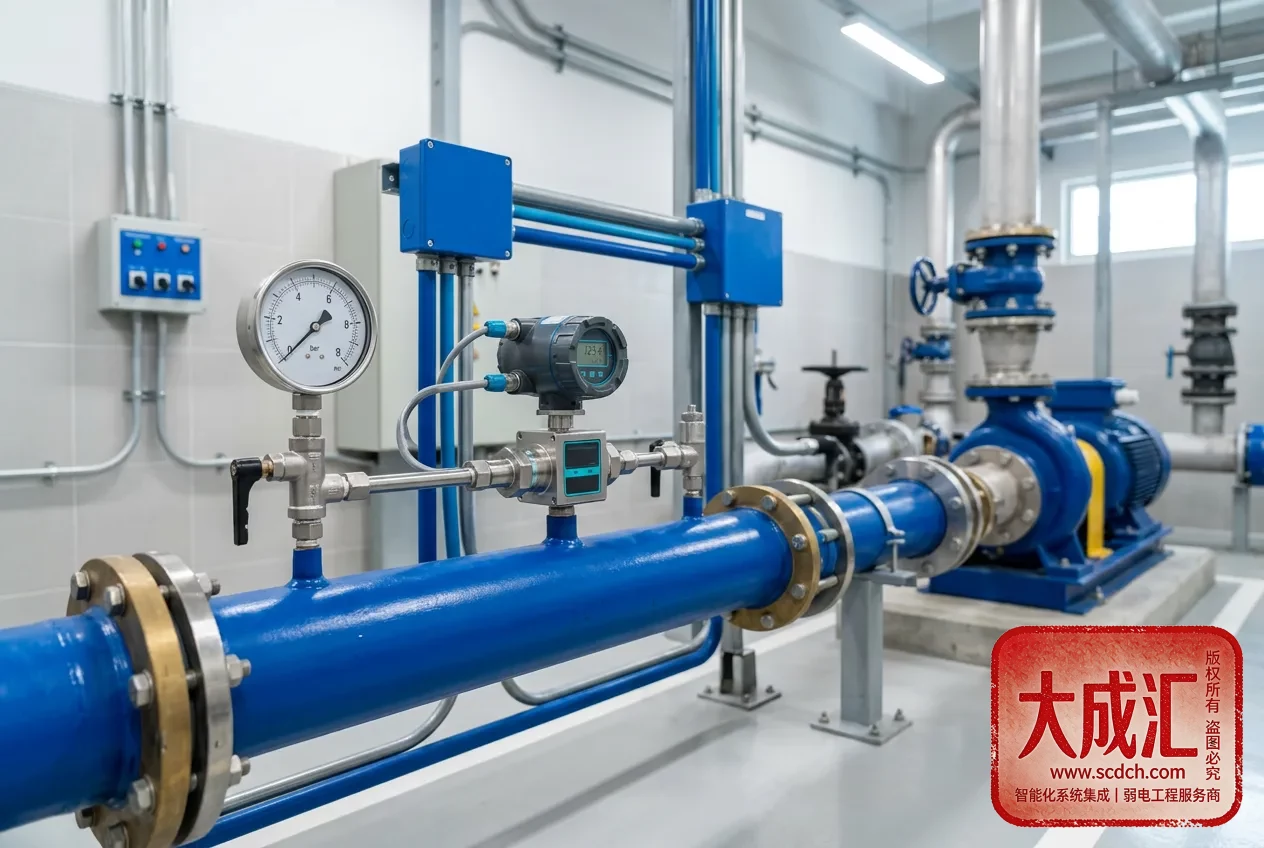
3.3 Online Water Quality Monitoring
Online water quality analyzers are installed at treatment plant outlets, pump stations and key network nodes to monitor residual chlorine, turbidity, pH and conductivity in real time, issuing immediate alerts when abnormal levels are exceeded. Water quality data converges on the same platform as pressure and flow, supporting a "single map of supply safety."
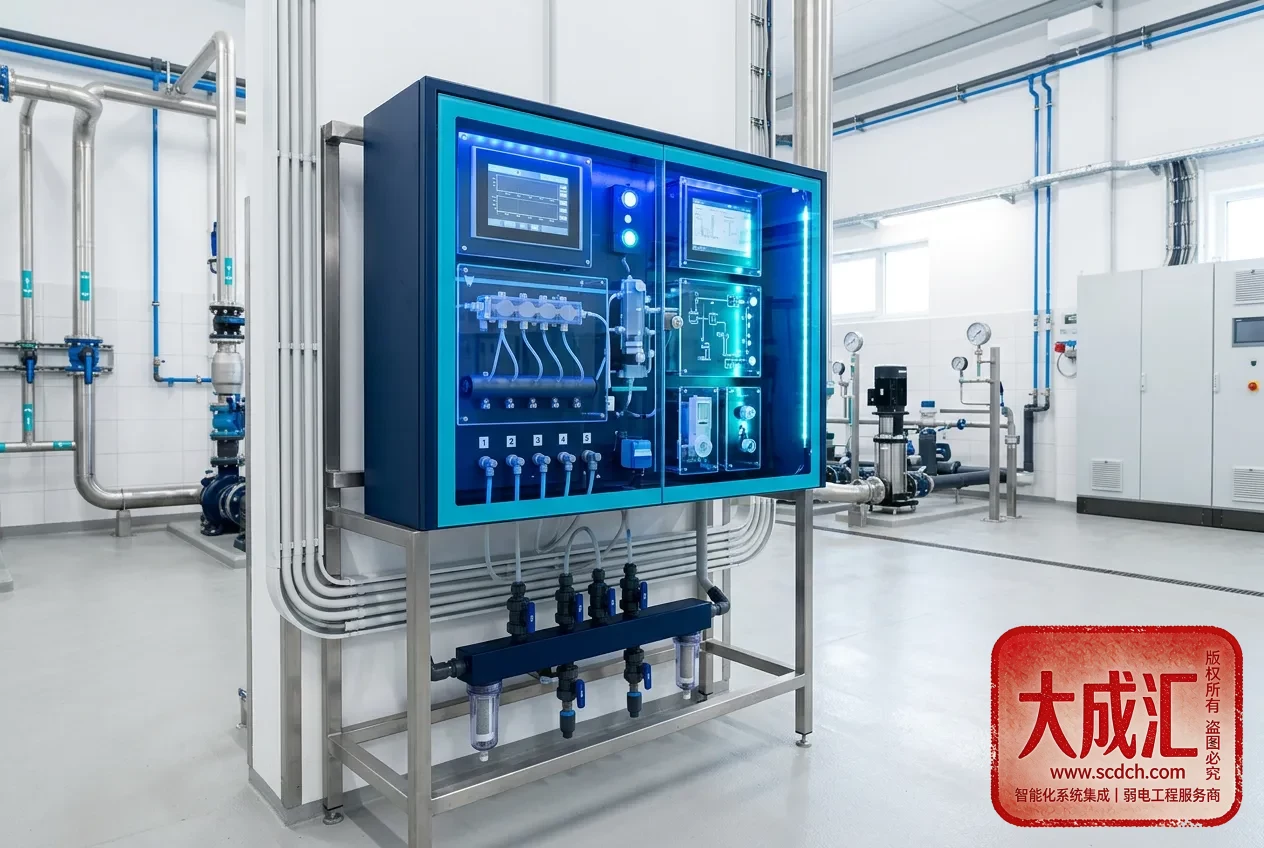
3.4 Pressure Regulation and Flow Stabilization
Based on real-time zonal pressure data, zonal pressure regulation is implemented through flow-control valves and variable-frequency pumping stations, reducing leakage and burst risks while satisfying customer water pressure. Sudden pressure changes automatically trigger warnings, buying time for emergency dispatch.
3.5 GIS Network One-Map View
Network assets, monitoring points, DMA boundaries, valves and hydrants are consolidated on a GIS one-map view, layered with real-time monitoring data and work-order flows to achieve visual closed-loop management of patrol, repair and dispatch.
4. Typical Application Scenarios
- Urban water supply networks: District metering and leakage control improve non-revenue water management;
- Secondary supply pump stations: Online monitoring of pressure, water quality and pump conditions secures the "last mile" of supply;
- Industrial parks: District metering and pressure regulation support refined industrial water management;
- Old residential community renovation: Sensors are deployed in parallel with network renovation to establish zonal monitoring baselines.
5. Compliance and Standards
Pipeline safety monitoring must align with national and industry standards; DCH implements them from design through acceptance:
- GB 5749 Standards for Drinking Water Quality — the baseline for water safety;
- CJJ 92 Standard for Leakage Control and Assessment of Urban Water Supply Networks — leakage rate control requirements;
- GB/T 38599 Technical Specification for Leak Detection of Urban Water Supply Networks — leak detection operation rules;
- Local standards and technical requirements for smart water and network monitoring;
- Compliance for water supply data security and residents' water use information security.
6. Why Choose DCH
As a local service provider with over 10 years of expertise in intelligent system integration, DCH delivers differentiated capabilities in water supply and municipal projects:
- Full-stack integration: Weak-current works, PLC control, communication links and data platforms are designed from one source, avoiding multi-vendor disputes;
- Full-lifecycle service: From zone planning, sensor deployment, installation and commissioning to calibration and O&M;
- Industry compliance: Familiar with leakage control and water quality standards; data is benchmarkable and auditable;
- Local response: Rapid on-site support across Sichuan and Southwest China, with dependable emergency repair;
- Proven cases: Serving many water utilities, government/enterprise clients and park operators with reusable delivery experience.
Together we achieve greatness and pool excellence. Guided by the philosophy of "innovation, integrity, professionalism and collaboration," DCH manages every supply network into a city "water artery" that leaks less, pressures steadily and delivers quality water.
7. Construction Essentials and Common Considerations
- DMA division: Divide zones by terrain, network structure and boundaries with complete boundary flow metering;
- Sensor placement: Prioritize zone boundaries, pump stations, aging networks and historically high-leakage areas;
- Minimum night flow: Establish night flow baselines per zone; abnormal rises indicate suspected leakage;
- Pressure management: Zonal regulation balances customer pressure and leakage control without over-regulating;
- Communication and power: NB-IoT/4G low-power transmission plus battery/mains dual options for field and chamber environments;
- Data closed loop: Monitoring, alerts, work orders and response are fully documented to form a continuous improvement mechanism.
8. FAQ
Q1: Can DMA metering directly identify the exact leak point?
DMA first quantifies "which zone leaks most," minimum night flow analysis narrows the scope, and noise-correlation leak detection then locates the leak — a three-step progressive approach that converges the search area step by step.
Q2: Which parameters does online water quality monitoring cover?
Treatment plant outlets and key nodes typically cover routine parameters such as residual chlorine, turbidity, pH and conductivity, extensible to ammonia nitrogen and COD per regulatory requirements. Exceedances trigger immediate alerts and linked dispatch.
Q3: Can aging networks also build a monitoring system?
Yes. Pre-embedding sensors during renovation is ideal; unrenovated areas can use chamber installation or hydrant-style access, building zonal baselines first and densifying gradually.
Q4: How does the system interface with existing utility platforms?
Data is packaged per water data standards and supports interfaces to SCADA, billing systems and higher-level water platforms, with formats and interface specifications meeting integration requirements.
For solution design or on-site survey tailored to a specific network scale, please contact the DCH intelligent system integration team for free preliminary consulting and DMA zone planning.