Medical IoT (RFID)
IoT traceability makes medical supplies and equipment "known and controllable."
The Medical Internet of Things (RFID) is a medical supply, equipment and personnel IoT system based on RFID and low-power wireless technologies. With over 10 years of experience in intelligent systems and healthcare informatization, Sichuan DCH Technology (DCH) integrates capabilities such as RFID tags and readers, Bluetooth/LoRa positioning, infant anti-abduction, infusion monitoring and asset inventory, delivering full-lifecycle services from solution design and tag selection to platform handover, so medical supplies and equipment are "traceable, locatable and controllable."
1. Background and Value
Hospitals manage a wide variety of supplies and equipment, and traditional manual inventory suffers from low efficiency, proneness to errors and discrepancies between accounts and physical assets. Critical scenarios such as infant safety and infusion safety additionally require real-time monitoring and warning.
For hospital managers, Medical IoT delivers the following value:
- IoT traceability: Supplies are traceable from receipt to use, with accounts matching physical assets;
- Asset visibility: Equipment location and status at a glance; fast, accurate inventory;
- Safety guard: Real-time infant anti-abduction and infusion monitoring warnings protect patients;
- Cost and efficiency: Automated inventory replaces manual counting, greatly reducing labor and time costs.
2. Overall Architecture: A Three-Layer Sensing–Positioning–Platform IoT System
DCH breaks Medical IoT into a "sensing–positioning–platform" three-layer architecture that ensures data collection and emphasizes safety applications:
| Layer | Components | Key Capabilities |
|---|---|---|
| Sensing layer | RFID tags and readers, sensor tags, infusion monitoring | Identification and real-time collection of supplies/equipment/personnel |
| Positioning layer | Bluetooth/LoRa positioning, zonal readers, infant anti-abduction base stations | Location sensing, zonal monitoring, boundary alarm |
| Platform layer | Medical IoT platform, asset register, safety alarms | Unified management, inventory analysis, closed-loop response |
From sensing to positioning to platform, the system is planned and delivered as an integrated whole. Managers track supply distribution, equipment status and safety events via the platform, turning scattered "tags" into a coordinated "IoT network."
3. Core Systems and Key Points
3.1 RFID Tags and Reading
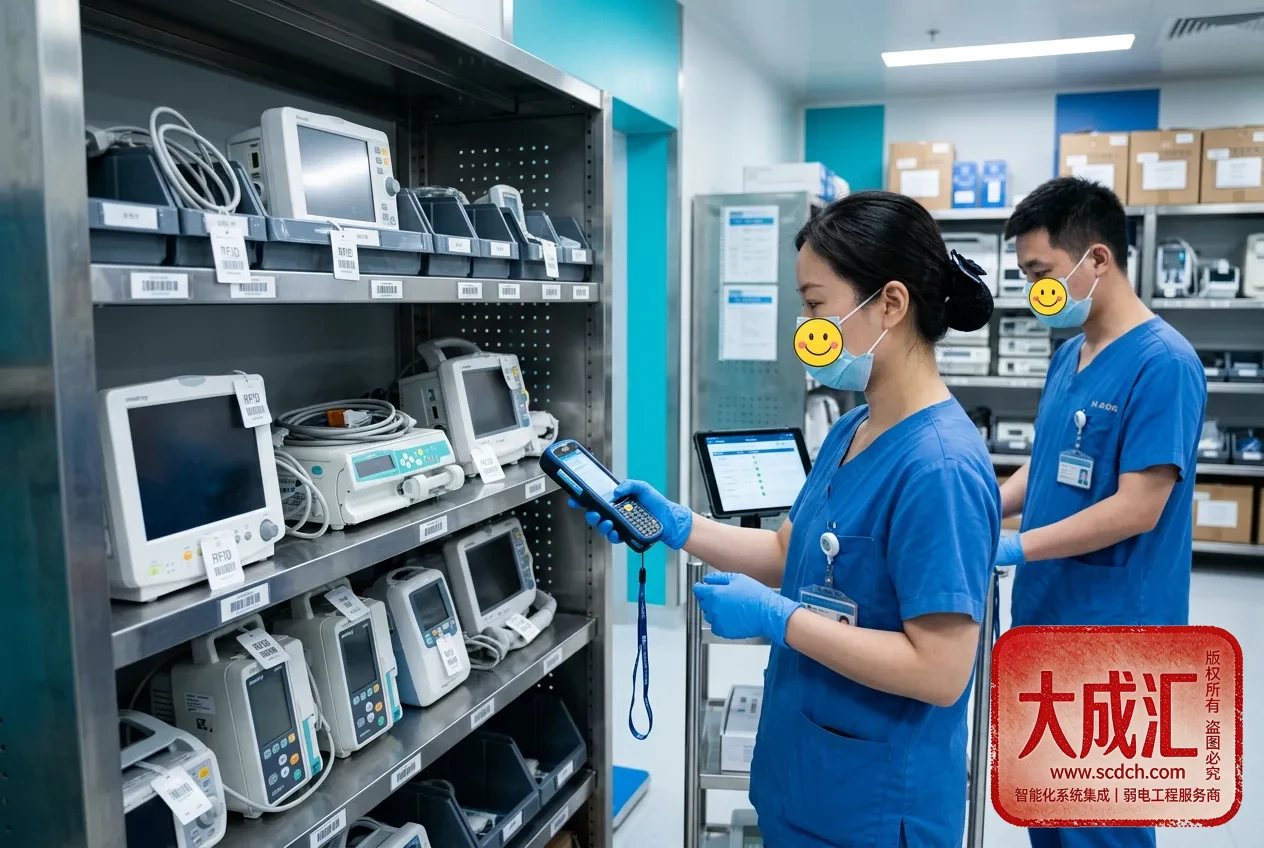
RFID tags (HF/UHF, anti-metal/sterilization-resistant) are selected per material and environment, with fixed readers and handheld terminals deployed for fast inventory, automatic receipt/dispatch recognition and batch traceability.
3.2 Bluetooth/LoRa Positioning
Bluetooth or LoRa positioning is used for personnel and key equipment to provide zone-level location awareness; accuracy is configured by scenario to meet asset coarse-location and personnel safety management needs.
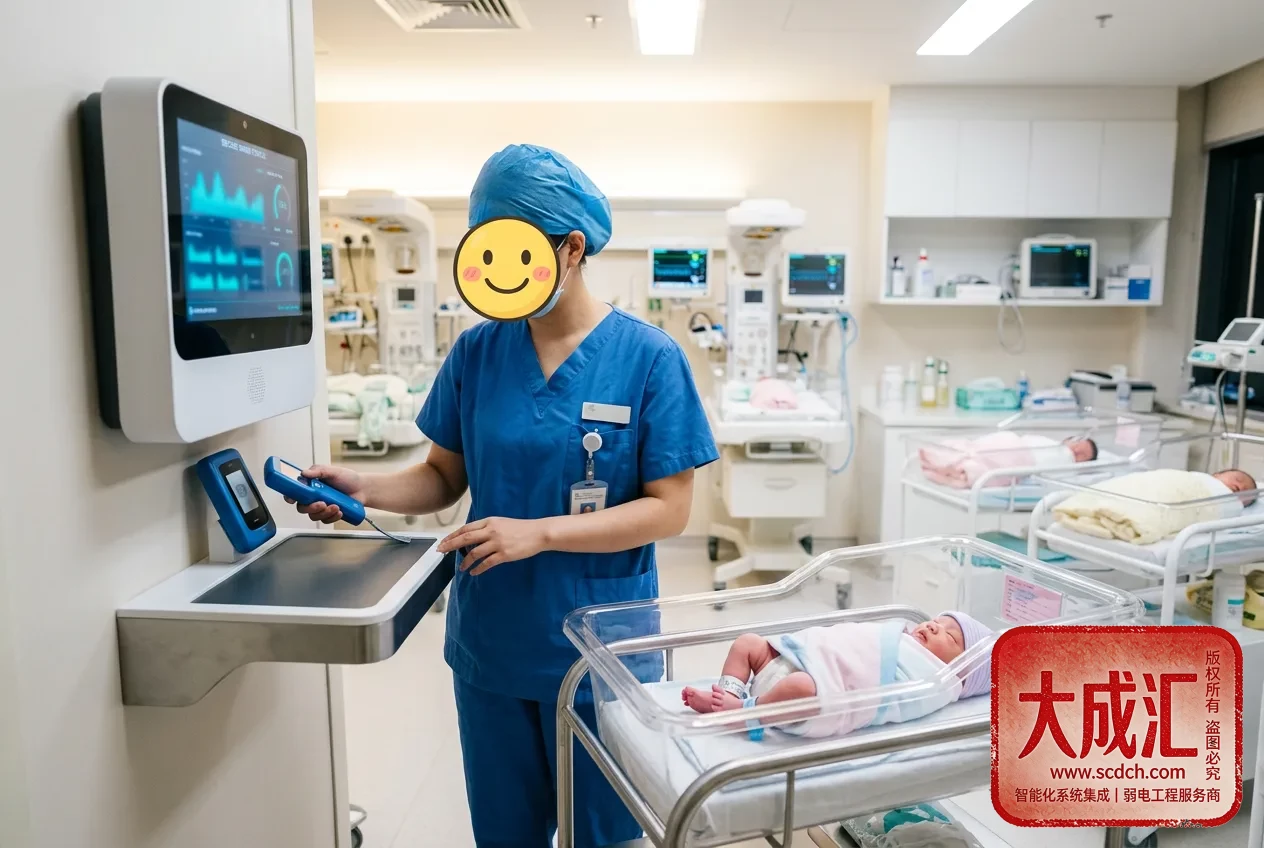
3.3 Infant Anti-Abduction
Newborns wear electronic wristbands linked with ward access control/zonal base stations; unauthorized removal triggers alarms, achieving infant anti-abduction and safety protection.
3.4 Infusion Monitoring and Asset Inventory
In infusion scenarios, infusion monitoring senses drip rate and remaining volume in real time with automatic anomaly alarms; the equipment department uses RFID asset inventory for rapid hospital-wide equipment counting with accounts matching physical assets.
4. Typical Application Scenarios
- Pharmacies and consumables: Automatic receipt/dispatch recognition, batch traceability and expiry management;
- Equipment department: Rapid hospital-wide inventory, location and maintenance tracking;
- Neonatology: Infant wristband anti-abduction with real-time zonal boundary alarms;
- Operating rooms: Traceability of surgical instruments and consumables for surgical safety.
5. Compliance and Standards
Medical IoT construction must align with industry specifications and compliance requirements; DCH implements them from design through acceptance:
- Requirements for Unique Device Identification (UDI);
- Guidelines and codes for hospital IoT construction;
- Compliance requirements for patient personal information and medical data security;
- Relevant standards for medical equipment and supplies management.
6. Why Choose DCH
As a local service provider with over 10 years of expertise in intelligent system integration, DCH delivers differentiated capabilities in Medical IoT projects:
- Full-stack integration: RFID, positioning, platforms and HIS interfaces are designed from one source, avoiding multi-vendor disputes;
- Full-lifecycle service: From solution design, tag selection and equipment installation to platform handover;
- Healthcare compliance: Familiar with UDI and medical data security requirements;
- Local response: Rapid on-site support across Sichuan and Southwest China;
- Proven cases: Serving many hospitals and medical groups with reusable delivery experience.
Together we achieve greatness and pool excellence. Guided by the philosophy of "innovation, integrity, professionalism and collaboration," DCH connects every tag into a medical safety net that is knowable, controllable and traceable.
7. Construction Essentials and Common Considerations
- Tag selection: Match materials and use environments (metal/liquid/sterilization) to ensure read rates;
- Positioning accuracy: Configure by scenario, balancing cost and needs;
- Safety compliance: Balance infant anti-abduction with patient privacy; encrypt data per compliance;
- HIS interface: Interoperate supply and equipment data with hospital information systems;
- Account matching: Close the loop between inventory and receipt/dispatch to keep registers accurate;
- O&M support: Unified management of readers and base stations with rapid fault response.
8. FAQ
Q1: Are RFID tags reusable?
It depends on type. Wristband tags are mostly single-use, while asset tags are reusable long-term; selection balances cost and reliability per scenario.
Q2: What positioning accuracy is achievable?
Bluetooth positioning reaches zone level (meter-scale); LoRa suits broad-area coarse positioning. Accuracy can be tiered per asset and personnel safety needs.
Q3: What about infant anti-abduction false alarms?
Standard wristband wearing plus zonal base station linkage plus algorithm filtering significantly reduce false alarms; anomaly alarms link video and security for rapid verification.
Q4: Can it interface with hospital HIS/SPD?
Yes. The Medical IoT platform interfaces with HIS and SPD through standard interfaces, interworking supply receipt/dispatch and equipment register data.
For detailed Medical IoT solution design tailored to a specific hospital department, please contact the DCH intelligent system integration team for free preliminary consulting and tag selection advice.